July 20, 2026
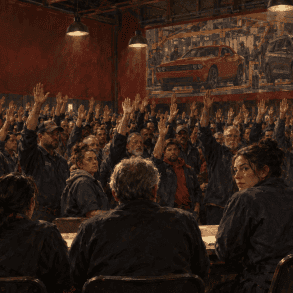
On July 15, the Senate Commerce Committee advanced the Connected Vehicle Security Act of 2026, S.4429, at a markup called by Chairman Cruz. The bipartisan bill from Senators Bernie Moreno and Elissa Slotkin would write the connected-vehicle ban into permanent statute, barring Chinese-linked connected vehicles and components from the US market.
The mechanism is the point. The restrictions already exist as the January 2025 Commerce Department rule, with software and connectivity provisions taking effect in 2027 and hardware provisions in 2030. A rule can be rewritten by the next administration; a statute cannot. S.4429 takes the single most consequential barrier between Chinese automakers and the US market and welds it in place, which is precisely why the UAW, GM, Ford, and the CAR Coalition lined up behind it.
The practical market effect this year rounds to zero, and that is worth saying plainly. The rule already stranded Polestar, whose Geely ownership put roughly 32 US dealers in limbo, a collapse GCBC covered when the ban first hit. BYD sells nowhere near the US market and has said so for years. Nobody loses access on July 15 who had not already lost it in January 2025.
What changes is the planning horizon. A Chinese OEM weighing a decade-long North American entry strategy could previously treat the BIS rule as one election away from revision. Canada has already shown the pressure works in the other direction, a gap GCBC examined when Ottawa’s carve-out talk surfaced at the G7. Statute forecloses the wait-them-out option in the US entirely, and it does so while those same brands hold a record 11% share in Europe, making the strategic split permanent: Europe is the contested market, the US is the closed one.
The contested market is moving faster than the standing forecasts. On July 18, AlixPartners projected Chinese brands will hold 16% of the EU market by 2030, five years earlier and a point higher than the CAR Centre’s long-standing call of 15% by 2035. Read against that curve, S.4429 looks less like protectionism than triage: Congress is not closing the door on a hypothetical, it is closing it on a trajectory Europe is already living.
The bill still needs a Senate floor vote and passage through three House committees, so nothing is law yet. But the committee vote reveals where the floor sits: a bipartisan majority wants the ban made irreversible before the 2027 software deadline arrives. For Chinese automakers reading the room, the message left the committee on July 15.