May 29, 2026
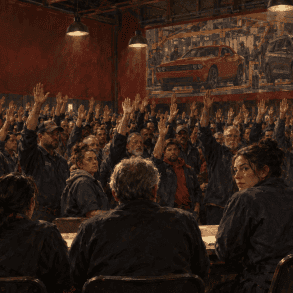
The room was the message before anyone spoke. USTR’s joint readout confirmed the round runs through Friday and is the first of three before the July 1 review opens. Round two is agriculture-focused in Washington on June 16-17. Round three returns to Mexico City on July 20. All three are bilateral. No Canadian round is on the same calendar.
The US auto-content ask changes the operating math. The current USMCA threshold is 75% North American content. The new position adds a US-specific layer on top of that 75% floor. The Mexican Secretaría de Economía confirmed receipt of the framing in its post-meeting statement. A Tiguan built in Puebla currently qualifies on regional value. The proposed rule would also require it to clear a US-content threshold or fall back into the 25% non-USMCA-compliant bucket. Volkswagen does not run a Tiguan US line.
The steel rule hits Tier-1 suppliers without warning. The US delegation is asking for “melted and poured” North American steel content, not just downstream rolled or stamped. The rule traces the steel back to the furnace. Suppliers buying Korean or Brazilian melt for North American forming would no longer qualify. GM’s Ramos Arizpe and Silao plants and Stellantis’s Toluca and Saltillo plants face input substitution at higher embedded cost, billed before the tariff stack applies.
The tariff stack is already heavy. The current rates: 25% on imported steel, 10% on imported aluminum, 25% on autos and parts not qualifying as USMCA-originating, and 20% on fentanyl-precursor non-originating content categories. Mexico’s USMCA-compliant exports clear the headline rate but the non-US portion still carries 25% by line. The Tax Foundation tracker quantifies the inversion: EU, Japan, and Korea finished vehicles enter the US at 15% under 2025 framework deals while USMCA-compliant Mexican and Canadian builds carry 25% on the non-US portion of their bill of materials.
The volume backstop is what makes the round consequential. Mexico assembles Chevrolet Equinox, Blazer, and Trax at GM Ramos Arizpe and Silao. Nissan Sentra, Versa, and Kicks at Aguascalientes. Mazda CX-30 at Salamanca. VW Tiguan and Jetta at Puebla. Honda HR-V at Celaya. Audi Q5 at San Jose Chiapa. BMW 3 Series at San Luis Potosi. Stellantis Toluca and Saltillo. All of that volume sits on USMCA-compliant duty-free entry. A US-specific minimum puts every nameplate into a new pricing window for model-year-2027 ordering.
Canada’s exclusion compounds Mexico’s exposure. Ottawa is participating in the trilateral working groups but is not at the Mexico City or Washington bilateral tables. GCBC’s March 19 piece on the Poilievre auto-pact proposal tracked Ottawa’s earlier pivot to a separate Canada-US framework. Two months later that pivot has lower leverage than the proposers imagined. Canada negotiating separately means Mexico negotiates alone.
GCBC’s coverage of the Stellantis FaSTLAne 2030 plan one week ago calibrated Antonio Filosa’s €60 billion 2030 plan against a tariff de-escalation assumption that is now in active negotiation. Toluca builds Jeep Compass for the US. Saltillo builds Ram heavy duty. A July 20 draft US-content minimum forces a re-cut of the Filosa five-year math against a new baseline.
The next data point is June 16. Round two opens in Washington with agriculture on the agenda but auto language likely to surface in side discussions. Either the US softens its content position before round three, or Mexico arrives at July 1 with a proposal it has to accept, counter, or break. The bilateral structure leaves no Canadian middle path.