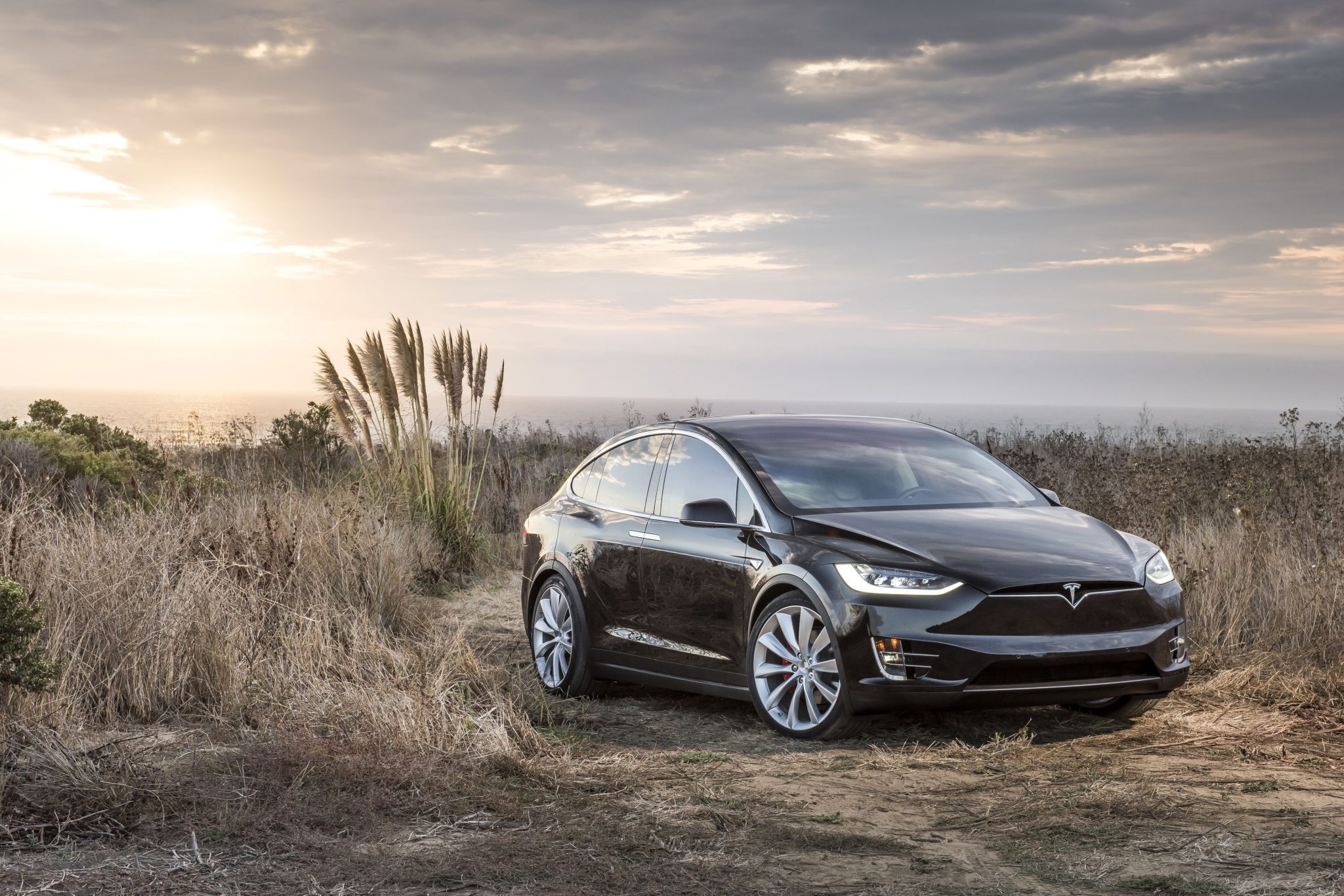
Tesla Model X
Here you will find monthly and yearly Canadian, European and U.S. sales figures for the Tesla Model X. The Tesla Model X is a full-size, all-electric luxury SUV introduced by Tesla, Inc. that brought falcon-wing doors, seven-passenger seating, and supercar acceleration to the SUV segment. Launched in 2015 after the Model S sedan proved the market for premium electric vehicles, the Model X extended Tesla’s reach to families and buyers who needed more space without sacrificing performance or range.
On January 28, 2026, CEO Elon Musk announced on Tesla’s Q4 2025 earnings call that Model X production will end in Q2 2026 alongside the Model S. After more than a decade in the lineup, Musk described the decision as an “honorable discharge” for both vehicles. The Fremont, California factory space currently dedicated to Model S and Model X production will be converted into a manufacturing facility for Tesla’s Optimus humanoid robot, with a long-term goal of one million units per year.
Tesla Model X Overview
The Model X was unveiled in 2012 and first deliveries reached customers in September 2015. Its falcon-wing rear doors became the vehicle’s signature feature, engineered to open in tight parking spaces using ultrasonic sensors to detect obstacles above and beside the vehicle. The doors provided easier access to second and third-row seating than conventional SUV doors, though their complexity created early reliability headaches that Tesla spent years resolving.
Beneath the theatrical doors sat genuine engineering substance. The Model X shared its platform with the Model S but added a taller body, optional third-row seating for up to seven passengers, and a massive panoramic windshield that extended over the front seats. Performance variants delivered acceleration figures that had no business being in a three-row family hauler. The P100D could hit 60 mph in 2.9 seconds. The Plaid, introduced in the 2021 refresh alongside the updated Model S, pushed past 1,000 horsepower with a tri-motor configuration and sub-2.5 second 0-60 times.
Tesla updated the Model X through multiple hardware and software revisions over its production life. Variants progressed from the P90D and P100D through Long Range and Plaid trims, each indicating different battery capacities and performance levels. The 2021 refresh brought a redesigned interior with a new yoke-style steering wheel option, a horizontal center display, and improved materials. Over-the-air software updates continued adding features and refinements throughout the vehicle’s life, a capability that remains part of the ownership experience even after production ends.
End of Production: What It Means
Tesla had been quietly phasing out Model X orders in China and Europe through early 2025 before the formal announcement. By its final year, the Model X and Model S combined represented roughly 3% of Tesla’s 1.64 million global deliveries, with the Model 3 and Model Y accounting for 97% of volume. Tesla bundles Model S, Model X, and Cybertruck deliveries into a single “other models” category, which totaled approximately 50,850 units globally in 2025.
Musk stated that both the Model S and Model X platforms are too old to support Tesla’s unsupervised Full Self-Driving capabilities, making them incompatible with the company’s autonomous fleet vision. Tesla will continue to service existing Model X vehicles and provide software updates, though no specific timeline for long-term support has been disclosed.
The Model X currently starts at $99,990 for the AWD variant and $114,990 for the Plaid. Buyers interested in one of the last production units have a narrowing window before Q2 2026.
Tesla Model X Sales Figures
The Model X never matched the volume of Tesla’s more affordable models, but it carved out a position in the luxury SUV segment that no other all-electric vehicle occupied for years. Sales peaked in the late 2010s before the Model Y’s 2020 arrival absorbed much of the demand for a Tesla SUV at a significantly lower price point. The 2021 production shutdown for the refresh further compressed volumes, and the Model X never fully recovered its earlier sales pace. The data below tracks the Model X across its full production history in key markets.
Tesla Model X U.S Sales Data & Charts
US Monthly Sales
US Annual Sales
| Year | Sales Units |
|---|---|
| 2015 | 97 |
| 2016 | 2,725 |
| 2017 | 21,600 |
| 2018 | 27,250 |
| 2019 | 19,600 |
| 2020 | 26,100 |
| 2021 | 7,305 |
| 2022 | 24,099 |
| 2023 | 24,700 |
| 2024 | 21,099 |
| 2025 | 80,588 |
| 2026 | 12,000 |
US Annual Growth
Tesla Model X Canada Sales Data & Charts
Canada Monthly Sales
Canada Annual Sales
| Year | Sales Units |
|---|---|
| 2016 | 920 |
| 2017 | 1,800 |
| 2018 | 1,560 |
| 2019 | 1,680 |
| 2020 | 800 |
| 2021 | 1,000 |
| 2022 | 1,200 |
| 2023 | 1,400 |
| 2024 | 2,355 |
| 2025 | 922 |
| 2026 | 275 |
Canada Annual Growth
Tesla Model X Europe Sales Data & Charts
Europe Annual Sales
| Year | Sales Units |
|---|---|
| 2016 | 3,683 |
| 2017 | 11,877 |
| 2018 | 12,108 |
| 2019 | 7,861 |
| 2020 | 6,007 |
| 2021 | 496 |
| 2022 | 1,306 |