July 20, 2026
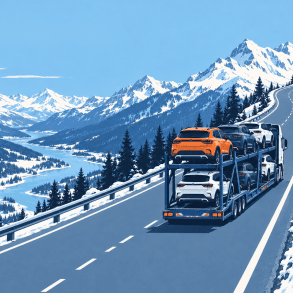
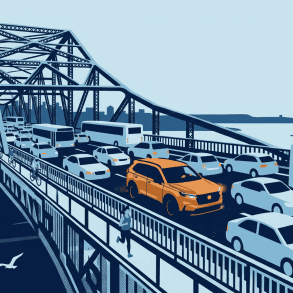
On July 27, the Gordie Howe International Bridge opens to traffic between Windsor, Ontario and Detroit, connecting Highway 401 directly to I-75, the bridge authority confirmed. It is the first new crossing on this stretch of river since the Ambassador Bridge opened in 1929, and it lands on the busiest commercial land border in North America, the one the auto industry’s parts and finished vehicles cross by the hundreds of millions of dollars every day. The $4.4 billion cable-stayed span was financed by Canada, which collects half the toll profits for the first fifteen years.
For 97 years, one privately owned bridge carried the spine of Detroit-Windsor auto trade. Every just-in-time seat, stamping, and engine shipment between Ontario plants and Michigan assembly lines has depended on a single crossing with no redundancy, a fact the industry mostly ignored until blockades and border closures periodically reminded it. The Gordie Howe span doubles that capacity and, more importantly, removes the single point of failure from the continent’s densest auto supply chain.
The labor pattern now has numbers
Ten days before the ribbon, the other half of the corridor’s economics went to a vote and came back priced. On July 19, Unifor members ratified the three-year agreement with 74% support on the master deal, covering 5,150 workers at Oakville Assembly, the Windsor annex operations, Essex Engine, and parts distribution in Ontario and Alberta; the salaried locals voted 97% and 100%. Wages rise 9% over three years, taking the production base rate to roughly $50 an hour by year three and skilled trades to about $63. Full-time workers collect a $10,000 ratification bonus plus a $12,000 first-year lump sum, and laid-off Oakville workers receive $10,000 of their own. The contract runs September 21, 2026 through September 19, 2029.
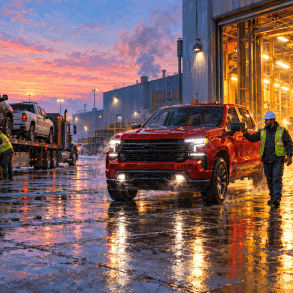
The investment schedule is where the deal talks. Ford commits C$1.25 billion to its Canadian footprint: $550 million for Oakville Assembly and $700 million for Essex Engine, funding 5.0-liter V8 expansion, 7.3-liter engine production, and a projected third shift. That is a direct wager that North American truck combustion demand holds deep into the 2030s, and Windsor is where the chips landed.
Unifor chose Ford first for what it called the company’s strongest commitment to its Canadian footprint, and the choice matters beyond Ford. That structure, 9% on wages and C$1.25 billion in investment, now becomes the template Unifor carries to GM Canada and Stellantis Canada before those contracts expire September 20. Pattern bargaining means the July 19 vote effectively priced Canadian assembly labor for all three Detroit automakers through 2029.
Stellantis has the most riding on the number. Windsor Assembly, which GCBC covered during its production halt in April, sits fifteen minutes from the new bridge, and the company’s North American recovery is being carried by exactly the products that cross this border. A pattern that adds 9% to wages over three years lands on the automaker least able to absorb it while its restructuring is still unproven.
Capacity up, terms in flux
The bridge opens seven days after USMCA renegotiators convene their third round in Mexico City on July 20, and the trade rules governing what crosses the new span are themselves in flux this same month. The timing of all of it is dense by any standard. That context cuts both ways: Canada is adding physical capacity to a corridor whose commercial terms are being renegotiated in real time, which is either well-timed confidence or expensive irony depending on how the talks land.
What is settled is this: by July 27, the Detroit-Windsor corridor will have twice the crossing capacity it has had since 1929, and Canadian auto labor already has its new three-year price. Infrastructure decides how much can move; the pattern decides what it costs to build the things that move. Both numbers were written inside the same ten days, and both outlast every headline currently sitting on top of them.