April 18, 2026
Stellantis released its Q1 2026 shipments before the Amsterdam market opened on April 15: 1.4 million units globally, up 12%, with North America up 17% on roughly 54,000 incremental vehicles. Enlarged Europe was up 12% on 69,000 units. Middle East and Africa was up 11%, led by Türkiye. The company called the print a “positive start to the year” and pointed to the Ram 1500 HEMI V8, the refreshed Jeep Grand Wagoneer, and the new Jeep Cherokee as driving more than 100% of North American growth.
That is the story the headline wire services ran. It is also the story worth pressure-testing.
The first pressure is definitional. Shipments is a wholesale figure. It measures what leaves the factory on a rail car, a truck, or a transport ship. It does not measure what a consumer drives off a dealer lot. In most quarters, those two lines move together because dealers restock at roughly the rate they retail. In quarters where wholesale outruns retail, inventory accumulates in transit or on dealer lots. Stellantis is not disclosing Q1 retail units here. The US reports filed later in April will show whether shipment growth translated into customer deliveries or into a fatter stock-day count.
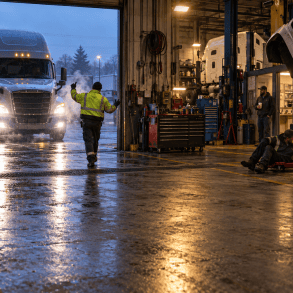
The second pressure is physical. Windsor Assembly, which builds the Chrysler Pacifica and Voyager, has been idled since April 7. Stellantis confirmed the shutdown as a two-week action, with a restart targeted around April 21. For eight of the ten business days that sat between the Q1 quarter close and the April 15 press release, the plant was dark. Windsor is not a Ram plant, and it is not a Jeep plant, but it is a North American minivan plant that represents the segment Pacifica dominates. Idling it for two weeks removes roughly a thousand Pacifica and Voyager units from the production pipeline per shift-week, by rough estimate. That is not a volume number that will show up in Q2 reporting for another 90 days.
The three numbers inside the one number
The 17% North American gain is the headline. Three sub-lines inside it are the interesting data.
| Region | Q1 2026 YoY change | Incremental units | Notable |
|---|---|---|---|
| North America | +17% | +54,000 | Ram 1500 HEMI V8, Grand Wagoneer, Jeep Cherokee >100% of gain |
| Enlarged Europe | +12% | +69,000 | EU pickup-restriction threat looms for July 2026 |
| Middle East / Africa | +11% | +11,000 | Türkiye led; Iran exposure limited but watch Hormuz |
| South America / China | not broken out | n/d | Underweight regions in consolidated print |
| Global | +12% | ~150,000 | Unaudited, press-release metric |
Source: Stellantis Q1 2026 press release, April 15, 2026.
The specific product attribution matters because it identifies what is not being reported. When three products drive more than 100% of regional growth, the rest of the regional lineup is running either flat or slightly down. That includes Chrysler Pacifica, which is assembled at Windsor. It includes the Jeep Wagoneer S electric, whose ramp has been limited. It includes the smaller Jeep lineup where Cherokee is new and Compass is in transition. A 17% headline is robust. A 17% headline built on three products is a product mix warning label, not a portfolio-wide validation.
What the Windsor idle tells you that the press release does not
Two-week production pauses at North American assembly plants are not unusual in tariff years. They happen for inventory management, for launch-cadence changes, and for supplier constraints. Stellantis halted Windsor and Toluca earlier in 2026, resumed, and is running another cycle now. What makes the current halt worth flagging is its calendar proximity to the shipment release.
When a company reports +12% wholesale growth in a press release on April 15 and the factory building one of its North American volume products has been dark since April 7, a reader with a dealer’s perspective should ask two questions. First, were the April 1-6 Windsor units that would have been built this month front-loaded into Q1 shipments to support the quarterly print? Second, will the April 21 restart produce a bump into Q2 that is less about underlying retail demand and more about catching up on inventory shortfall? Neither of those dynamics would be unusual, and neither one would be wrong on its own terms, but both would mean the +12% figure is somewhat weather-affected rather than structurally clean.
The Ram side of the ledger has its own wrinkle. Stellantis just issued a recall of 65,000-plus Ram trucks across the 2025-2026 model years for an instrument panel cluster that can freeze at startup or while driving. The supplier is Marelli, the former Stellantis in-house electronics group spun off in 2021. The campaign covers Ram 1500, 2500, 3500, 4500, and 5500 cab chassis. The affected trucks are the Q1 growth products. VINs became searchable on NHTSA.gov on April 16, the day after the shipment release. Owner letters are scheduled for May 28.
A recall on the precise product line that powered the quarter’s wholesale growth is not an indictment of the Q1 print. It is, however, a piece of cost information that does not yet sit inside the shipment headline. The fix is software at the dealer, which minimizes direct remediation cost, but dealer service-bay capacity absorbed by campaign work is service-bay capacity not available for warranty, trade-in reconditioning, or CPO refurb.
The AGM put a floor under the reset; it did not put a number on it
Antonio Filosa’s first annual general meeting as CEO in Amsterdam on April 14 approved every board resolution on the agenda, re-elected Chairman John Elkann, nominated Juergen Esser as a new director, and endorsed a strategic reset tied to the €26.5 billion business plan. It did not include 2026 revenue guidance, 2026 unit volume guidance, or a 2026 margin target. Filosa referenced the reset language. Elkann framed 2025 as a year of tariff, regulatory, and competitive pressure. Neither figure ran a specific number up the flagpole.
That silence on 2026 guidance is consistent with the silence in the Q1 shipment release. What Stellantis is telling Wall Street is that the direction of the reset is correct and the product mix is right. What Stellantis is not yet telling Wall Street is what the reset is worth in consolidated margin, what the pickup restriction in the EU’s Industrial Accelerator Act will do to Ram export planning, or how the Windsor idle cycle resolves into Q2. Those three variables are what make the next 90 days a referendum on whether the reset is priceable or whether it remains aspirational.
What a GCBC reader should pull from this quarter
Three things. First, the +12% print is real wholesale growth and it is concentrated in the US truck and body-on-frame SUV business. That is the part of the US market where Detroit is diverging from itself: OEMs that kept commitment to civilian pickup and full-size SUV volume are outperforming the rest. Stellantis is unambiguously in the first group. Ford, with Q1 F-Series off 16%, is not.
Second, the Windsor idle is the physical reality the press release does not address. The plant is dark, it has been dark for 10 days, and it will be dark through April 21 unless the restart slides. Whether that halt is inventory management, supplier constraint, or demand-facing, it is not +17%-growth behavior. It is something else, and the April retail print and the May dealer inventory report will tell GCBC readers which one.
Third, the Ram recall lands on the growth engine of the quarter. Calibration problems on the Marelli-supplied IPC are a software fix and a supplier story, not a design flaw. But the recall cadence across Detroit in 2026 is the operational constraint nobody has priced fully. Fleet-wide software complexity has driven Ford past 13 million campaign units year-to-date. Ram 1500 at 65,000 is small inside that trend but specific to the product that made Q1 look as good as it did.
What it means
The Q1 shipment print is not a fiction, and nothing about the Windsor halt proves it was manufactured. But the +12% figure is wholesale, and the ground-level production reality is two-tiered: Ram and Jeep running hard, Pacifica production paused, Marelli-built IPCs being software-patched at dealers. Filosa bought himself the room he needed at the AGM. The next eight Mondays will tell GCBC readers whether the reset survives contact with a Q2 that includes a Hormuz-affected supply chain, a jet-fuel-constrained European logistics base, and an EU pickup-restriction negotiation whose resolution directly affects the trucks powering the North American growth. The +12% headline was the easy quarter. The number that is coming now is the hard one.