August 10, 2026
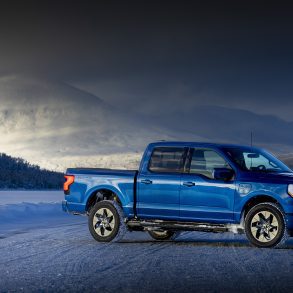
Marco Schubert is moving from Audi, where he runs global sales, to take over Volkswagen Group of America from the departing Kjell Gruner, according to an August 7 Reuters report carried by company sources. The leadership change travels with a product decision that American VW dealers have been requesting for roughly as long as anyone can remember: a pickup truck, built in the United States, aimed at the market before the end of the decade. Whether VW develops it alone or with a partner is undecided, with an answer expected in the coming weeks and months. Reuters notes Ford is viewed as a candidate, given the two companies’ existing cooperation.
Skepticism is the correct opening position, and even the trade press reached for it within hours. VW showed Americans the Tanoak pickup concept at the 2018 New York show and never built it. The Amarok, VW’s actual global truck, has spent two generations not coming here. Every previous version of this promise died on the same question: where do you build it, and what does it cost to bring in? A 25% tariff on imported pickups, the chicken tax, has guarded the segment since 1964, and it is why every serious truck in America is built in North America.
The Plant Changes the Math
Chattanooga is what makes this round different from 2018. VW’s Tennessee plant lost its reason for existing earlier this year when ID.4 production stopped after the federal EV credit expired and demand went with it. An assembly plant with nothing to assemble is one of the most expensive objects in industrial America, and VW is currently paying for one. A US-built truck solves three problems in one motion: it fills idled capacity, it clears the chicken tax entirely, and it finally puts VW in one of the two segments its own brand chief, Thomas Schaefer, has identified as high-margin territory where the company simply does not compete. Volkswagen’s US volume has run on compact crossovers for years while the industry’s profit pooled in trucks and large SUVs. The gap is not a mystery. It is a product plan that never got approved.
The money context matters just as much, because the growth plan and the shrinking plan are the same company. VW is deep into a restructuring that GCBC covered in the German white-collar cuts, with up to 100,000 positions affected and revenue guidance lowered. A new truck program costs billions the company is actively trying not to spend, which is precisely why the partnership question is live. Sharing a platform, with Ford or anyone else, is how a company mid-diet affords a new segment. VW and Ford have done this dance before, and the Amarok that never came here is, in its current generation, a Ranger under the skin.
Late to a Party That Keeps Getting Cheaper
Timing is the honest problem with a late-decade truck. The affordable end of the American pickup market is getting crowded and cheap at the same time. The Maverick’s value trims are among the few unambiguous growth stories in Ford’s lineup this year, Slate has preorders open on a $24,950 electric truck, and Ford just priced the Fathom at $28,350 for 2027 delivery. By the time a VW truck reaches showrooms, the fight it is joining will be several product cycles old and priced accordingly. A late entrant needs either a cost structure that undercuts incumbents or a brand story that justifies a premium, and VW’s American history offers more evidence for the second than the first.
None of which makes the reset wrong. It makes it overdue, and overdue is worth something when it finally arrives with hardware attached. Past VW truck talk came with concept cars and surveys. This version comes with a named CEO change, an idle plant that needs a product, a stated segment target from the brand chief, and a partnership decision on a clock measured in weeks. Those are the fingerprints of a program being staffed, not a trial balloon being floated.
What settles it will arrive in pieces: the Schubert start date, the build-or-partner decision, and the powertrain call, which VW has not made publicly and which will say everything about whether Chattanooga’s EV tooling gets reused or retired. Dealers have heard the truck promise before and learned to order inventory for the market that exists. The difference this time is that VW’s American problem stopped being about ambition and became about an empty building. Empty buildings have a way of getting decisions made.