September 15, 2026
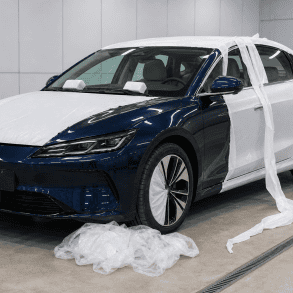
4,000 jobs and 3.82 billion euros were announced by the same corporate parent on the same day. Jaguar Land Rover confirmed the cuts on September 7, targeting 1.7 billion pounds of savings. Tata Motors opened the acceptance period on its tender offer for Iveco Group the same morning. One business is being bought into. The other is being cut.
Roughly 10% of JLR’s global workforce leaves over two years, concentrated in office and non-production roles, with the majority of the reduction falling in the UK. Chief executive PB Balaji attributed the decision to technological change, competition and geopolitical uncertainty. Factory workers are largely spared. The company is keeping its capital plan intact at 15 to 18 billion pounds across five years for electrification and digital technology, which means the cut falls on the layer that manages that spending rather than on the spending itself.
Three pressures show up in JLR’s own explanation and they are worth separating, because they have different durations. Price competition from Chinese manufacturers is structural and permanent. US tariffs are a policy variable that can move in either direction. The production-halting cyberattack that hit the company earlier in 2026 was a one-time operational event with a recurring insurance and systems cost attached. A cost program sized for all three treats the recoverable ones as though they are permanent, which is the conservative call and also the expensive one.
What the Tender Offer Actually Commits
14.10 euros a share in cash is the offer, made through TML CV Holdings B.V. and valuing Iveco near 3.82 billion euros. Iveco’s board has unanimously recommended it. Exor N.V. holds a 27.06% economic stake carrying 43.19% of the voting rights and has committed to tender. The acceptance window opened September 7 and closes October 26. Minimum acceptance is set at 95%, dropping to 80% if shareholders approve a Back-End Resolution at an extraordinary general meeting on October 16.
590,000 units a year and about 21 billion euros of revenue is what the combined commercial-vehicle business would carry across Europe, Asia and Latin America. That scale is the argument for the price. Iveco brings European truck and bus capacity and a dealer network that Tata’s own commercial-vehicle operation, which is largely Indian, does not have. Nothing about the deal has closed, and none of the operating logic above is contingent on it closing, because the offer itself is the decision being read here.
Reading the Two Decisions Together
Two capital decisions in seven days from one parent describe a ranking. Tata Motors is prepared to put 3.82 billion euros of fresh money into commercial vehicles while extracting 1.7 billion pounds of cost from premium passenger. Commercial vehicles are bought on freight demand, replacement cycles and total cost of ownership. Premium passenger is bought on brand, discretionary income and product cadence, and is the segment where Chinese manufacturers have moved fastest on price.
15 to 18 billion pounds of preserved JLR investment complicates the tidy version of that story. If Tata were simply reallocating away from premium passenger, the electrification budget would be the first thing cut. It was not. What was cut is the headcount that administers it. That is a bet that the products in the plan are right and the organization building them is too large, which is a narrower and more testable claim than a strategic retreat.
October 26 is the next fixed date. If acceptances clear the threshold, Tata’s commercial-vehicle business roughly doubles its addressable geography and the group’s center of gravity shifts toward trucks. If they do not, the JLR cost program proceeds regardless, because it was never conditioned on the tender. Jaguar Land Rover volume through the back half of 2026 is where the savings target meets the demand that has to fund it.
October 16 and October 26 are the two beats already on the calendar. The extraordinary general meeting on the 16th decides whether the acceptance threshold falls from 95% to 80%, which is the difference between needing a clean sweep and needing a workable majority. Exor’s 43.19% of voting rights is what makes that vote winnable, and it is also why the 95% figure was never the real test. The window closes ten days later.
1.7 billion pounds is the number JLR now has to produce, and cost programs of that size are judged on how much of the saving survives contact with the revenue line. Cutting 4,000 administrative roles removes a known annual cost. Whether it removes capability that the 15 to 18 billion pound product plan depends on is not knowable for two years, which is exactly the length of the program. GCBC’s August analysis of how JLR and Ford answered the same tariff question from different volume positions is the useful companion, because the answer a company gives depends on how much product it has to move.