TLDR: BYD unveiled Blade Battery 2.0 today with 210 Wh/kg energy density—40% above the original—enabling 1,006 km range on a single charge in the new Yangwang U7. Flash charging reaches 1,500 kW, recovering 400 km in five minutes. The announcement cements BYD’s decisive advantage as Western automakers absorb $55 billion in EV losses.
A decade ago, range anxiety killed electric vehicles in the consumer mind. Then came charging times that made gas stations look efficient. And always the question of whether these batteries would still work a decade from now. Today, BYD answered all three objections at once.
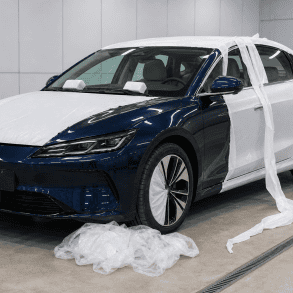
The company’s technology summit in China today revealed Blade Battery 2.0, a lithium iron phosphate cell that delivers 210 Wh/kg, obliterating the 40% gap between its original Blade Battery and the densest chemistries available. The new Yangwang U7, a flagship sedan with quad-motor all-wheel drive, achieves 1,006 kilometers of CLTC-rated range on a 150 kWh pack. Flash charging at 1,500 kW recovery speed can restore 400 kilometers in five minutes.
This isn’t incremental. It’s a reset.
The 1,000-Kilometer Sentence That Changes Everything
For years, the industry’s competitive advantage in EVs hinged on range parity with combustion engines. Tesla built its empire on it. Traditional automakers spent 2024 and 2025 chasing it while burning cash. And just as the chase appeared competitive, BYD didn’t improve the gap. It closed it completely.
The Yangwang U7’s 1,006 km capability reframes the entire EV value proposition. A driver can traverse entire countries on a single charge. Road trip objections evaporate. The vehicle doesn’t just compete with gas cars. It outperforms them in ways that matter most to consumers in real conditions.
Most competitive advantage in the battery space comes from energy density. The Blade 2.0’s 210 Wh/kg represents a decisive leap over first-generation LFP chemistry, which hovers around 150 Wh/kg. The mathematics are unforgiving: more watt-hours per kilogram means longer range without adding weight, complexity, or cost proportionally.
When Five Minutes Becomes the Real Competitive Moat
Charging speed has always been EV’s phantom limb. BYD’s flash charging architecture at 1,500 kW suggests the company has solved the second half of that equation: making the quick-charge option so available that range anxiety itself becomes an anachronism.
The specifications are almost clinical in their boldness. Four hundred kilometers recovered in three hundred seconds. The mathematics collapse the practical difference between plugging in and pumping gas. Range anxiety doesn’t disappear because cars go farther. It disappears because refueling time becomes irrelevant.
Recent reports indicate speculation about charging speeds exceeding 2,100 kW in certain markets, though today’s announced specification remains at 1,500 kW. Either figure effectively ends the discussion about EV practicality that occupied the industry from 2023 through 2025.
The Cycle Life Nobody Talks About Until It Matters
The Blade 2.0’s 3,000-cycle rating translates to approximately 1.2 million kilometers of vehicle lifespan, a figure that transforms battery economics permanently. Over a decade ago, the question plaguing EV adoption was whether these expensive packs would survive their vehicles’ useful lives. BYD solved it with the original Blade Battery. The 2.0 iteration simply extends the conversation beyond vehicles into infrastructure.
Fleets planning electric truck conversions now operate on certainty rather than speculation. Used EV market economics shift when packs reliably outlast vehicles. BYD’s cumulative sales dominance over the past eighteen months reflects market confidence in this longevity claim translated into purchasing behavior.
The company simultaneously launched refinements to its DM-i 6.0 plug-in hybrid platform and DiPilot 5.0 autonomous driving assistance system. These weren’t the story today. They were insurance policies against the idea that range-extended vehicles might retain market relevance. BYD’s positioning suggests the company expects pure-electric will dominate the product spectrum going forward.
The Arithmetic of Competitive Collapse
While BYD demonstrated battery technology that answers every remaining objection to EV adoption, Western automakers booked $55 billion in EV-related writedowns across 2024 and 2025. Stellantis absorbed €22 billion. Ford wrote down $19.5 billion. General Motors absorbed $6 billion. The cumulative effect of these losses manifests in delayed launches, downgraded specifications, and vehicles designed to compete on price rather than capability.
BYD doesn’t compete on price anymore. It competes on what works.
The U.S. battery electric vehicle market stalled at 5.6% market share in February 2026, a number that suggests either consumer reluctance to adopt electric vehicles has hardened or that Western automakers’ offerings have failed to deliver the value proposition necessary to accelerate adoption. The Yangwang U7 and its Blade 2.0 pack suggest the answer isn’t consumer resistance. It’s product inadequacy from competitors still operating within the strategic constraints of combustion-engine manufacturing.
BYD’s March 5 technology reset doesn’t represent incremental progress. It represents the closure of every remaining objection the industry created for itself over the past decade. The gap doesn’t narrow anymore. It disappears.