September 15, 2026
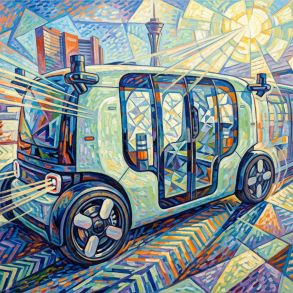
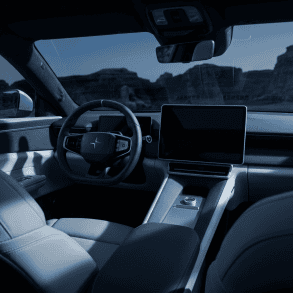
Audit Query AQ26002 was opened by NHTSA on September 3 and announced the following day. The agency’s investigation resume puts the population at an estimated 1,000 Cybercabs and dates the opening to the day Tesla began commercial deployment in Austin. Tesla notified the agency that it certified the vehicles as compliant with all applicable Federal Motor Vehicle Safety Standards. NHTSA will examine the process and technical data behind that certification, including how far it depended on determinations that certain standards do not apply to a car with no brake pedal, accelerator, steering wheel or mirrors.
NHTSA opens an Audit Query to test a manufacturer’s certification process, not to test a vehicle, and the difference decides the risk here. A defect investigation asks whether a car in service is dangerous and ends in a recall or a closure. An audit query asks whether the paperwork that declared the car legal was sound. A vehicle can be entirely safe and still have been certified through a determination the agency rejects, and the remedy for that is not a software update.
Eight rulemakings covering brake pedals, windshield wipers, lighting and rearview mirrors are in progress, NHTSA said in the same announcement, and existing standards remain in force until they finish. That sentence is the one Tesla’s certification has to survive. The July proposal to remove the steering-wheel requirement is still a proposal, and the Cybercab was certified against the standards as written, which is precisely the gap AQ26002 exists to test. Zoox took the other route and obtained a Part 555 exemption before carrying passengers, and GCBC compared the two sequences when the Austin service opened with 45 registered vehicles.
September 9 put a second Tesla file on the same desk. A House member from Illinois wrote to the Secretary of Transportation citing an NBC News count of 43 videos showing drivers apparently asleep in moving Teslas with Autopilot or FSD engaged, 17 of them posted this year. The letter ties that pattern to EA26002, the engineering analysis NHTSA opened in March covering roughly 3.2 million FSD-equipped vehicles, quotes an on-screen prompt reading “Drowsiness detected. Stay focused with FSD,” and asks five questions by September 30, including whether the agency’s own data points to a defect requiring a recall.
Two dockets now ask opposite questions of the same company. AQ26002 asks how Tesla certified a car built on the premise that no driver is needed. EA26002 asks what happens when drivers in cars that require one stop driving. A supervised system that encourages continued use when it detects a drowsy driver, and an unsupervised vehicle whose compliance rests on the driver’s absence, are two answers to one design question, and NHTSA is now examining both at once.
45 Cybercabs were registered in Texas as of September 6, against a query sized at 1,000. Watch the docket rather than the fleet count. If NHTSA concludes the self-certification was not adequately supported, the question becomes what happens to vehicles already carrying passengers, and no party has an established answer to that.