October 30, 2026
| Rivian, three months to | Sept 30, 2026 | June 30, 2026 | Sept 30, 2025 |
|---|---|---|---|
| Deliveries | 19,248 | 12,194 | 13,201 |
| Revenue | $2,155 million | $1,658 million | $1,558 million |
| Gross profit | $176 million | $179 million | $24 million |
| Operating cash flow | -$758 million | -$487 million | $26 million |
| Free cash flow | -$1,124 million | -$849 million | -$421 million |
| Cash and short-term investments | $5,502 million | $5,310 million | $7,088 million |
Source: Rivian third-quarter 2026 release, October 29, 2026. Free cash flow is Rivian’s non-GAAP measure: operating cash flow less capital spending.
| 2026 guidance | July 30 | October 29 |
|---|---|---|
| Vehicles delivered | 65,000 to 70,000 | 67,000 to 70,000 |
| Adjusted EBITDA | -$2.00 billion to -$1.80 billion | -$1.85 billion to -$1.75 billion |
| Capital expenditures | $1.70 billion to $1.80 billion | $1.40 billion to $1.50 billion |
Source: Rivian second- and third-quarter 2026 releases.
The R2 brought cars, not cash
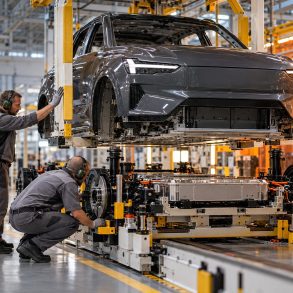
Rivian’s R2 became the company’s best seller in its first full quarter on sale. Three months after the first deliveries on June 9, the smaller SUV outsold both the R1 and the commercial van, according to Rivian’s third-quarter release, though the company does not say how many R2s it delivered.
What the R2 has not done yet is pay its way. Free cash flow was the largest outflow of Rivian’s three quarters this year, more than two and a half times the year-earlier figure, and the full-year guide does not see the loss narrowing in the fourth quarter. Until that changes, Rivian’s cash depends on money from outside, and the next big tranche comes with conditions that need Rivian to put money in first.
More vehicles, the same gross profit
Gross profit stood still on 7,054 more vehicles than in the second quarter, by GCBC’s arithmetic, and in fact slipped slightly. Gross margin fell to 8% from 11%. The release counts about $120 million of extra cost from ramping R2 production. Two items outside the cars themselves propped the line up: $81 million of regulatory-credit revenue and a tariff refund receivable of unstated size.
The car business still lost $80 million at the gross line. The profit came from software and services, which earned $256 million, with most of that segment’s revenue coming from the Volkswagen joint venture.
Where the cash went
Operating cash flow did the damage, swinging to $758 million out from $26 million a year earlier. Rivian blames working capital: deferred revenue fell, and it bought inventory ahead of the R2 launch. The year-earlier base ran the other way. Deferred revenue, money received before it is earned, added $495 million to operating cash in the first nine months of 2025, and this year it has taken $637 million away.
Capital spending fell to $366 million from $447 million a year earlier, which kept the outflow from growing further. Rivian cut its full-year capital budget by $300 million at the midpoint, its second cut in two quarters after the $250 million trimmed in its second-quarter release. This time it gave one reason, “timing of spend”, so the money looks deferred rather than saved.
Stock sales refilled the tank
Cash and short-term investments rose between June and September despite the outflow. Rivian raised $2.6 billion from selling stock in the first nine months, the cash flow statement shows, close to the $3.05 billion of free cash flow that went out over the same months. The third quarter’s part was a July share offering of about $1.3 billion, which Rivian said in July would help fund the equity contributions and reserves for its federal loan.
Rivian’s next large source of money, an Energy Department loan of up to $4.5 billion for its Georgia plant, asks for some first. Its earnings presentation says the loan, with a first draw expected by early 2027, requires Rivian’s equity share and contingencies to be pre-funded into reserve accounts before the first advance. The same slide sets a $2.0 billion minimum consolidated liquidity covenant. Rivian itself says the structure is “accelerating the strategic need for capital to fund these reserves.”
Volkswagen Group funded a $1.0 billion loan in October, which lifts pro forma liquidity to $7.1 billion. This year’s outflow has averaged just over a billion dollars a quarter, and at that rate, by GCBC’s arithmetic, that sum would reach the floor in about five quarters, before the Uber and further Volkswagen money Rivian is targeting, all of it subject to conditions. It is the same runway question GCBC asked of Lucid after its second quarter.
The guide’s fourth quarter
Deliveries through September totalled 41,807. The narrowed range needs the fourth quarter to rise 31% to 46% on the third, GCBC’s arithmetic shows. The third quarter managed a bigger step than that from the second, so the range asks for the ramp to continue rather than to accelerate.
Adjusted EBITDA guidance improved by $100 million at the midpoint, which Rivian credits to regulatory credits, the tariff refund and higher deliveries. Take away the first nine months and the range leaves a fourth-quarter adjusted EBITDA loss of $464 million to $564 million, every point of it worse than the third quarter’s $435 million. More cars, on Rivian’s own numbers, still do not mean a smaller loss before the year ends.
What to watch
The fourth-quarter delivery release, due in early January, is the first test: anything under 25,193 misses the narrowed guide. The cash test comes with fourth-quarter results: whether the R2’s launch cost, about $120 million this quarter, shrinks as the second shift at Normal, Illinois fills, and whether working capital stops draining cash once the launch inventory is built. Before either, Rivian holds its Autonomy and AI Day on December 9.