October 26, 2026
| Q3, three months to Sept 30 | 2026 | 2025 |
|---|---|---|
| Revenue | SEK 66.9 billion | SEK 86.4 billion |
| Operating income (EBIT) | SEK -5.6 billion | SEK 6.4 billion |
| Adjusted EBIT (excl. JVs, associates and one-offs) | SEK -3.7 billion | SEK 5.8 billion |
| Adjusted EBIT margin | -5.6% | 6.7% |
| Free cash flow | SEK -8.9 billion | SEK -4.3 billion |
| Fully electric share of sales | 32% | 22% |
Source: Volvo Cars’ third-quarter 2026 release, October 23, 2026.
A credit bank, repriced
Volvo Cars lost money in the third quarter, and part of the loss came from an asset that US policy has made worth less. Its third-quarter release lists “a negative revaluation of SEK 1.1 billion in CAFE credits due to legislation changes in the US” beside raw materials and Polestar’s losses. A carmaker earns Corporate Average Fuel Economy credits by beating the US target and can bank them, use them to cover a later shortfall, or sell them to a rival that needs them.
Two changes bear on those credits, as GCBC’s report on NHTSA’s final rule set out. A federal law, Public Law 119-21, had already set the civil penalty for missing the target at $0, and the rule writes that figure into the agency’s regulations. The rule also stops credits earned from model year 2028 from being sold to another carmaker. The release does not name the law or say which change it means. With no fine to avoid, a carmaker short of its target has little reason to buy credits, and a bank of them is worth less to the company holding it.
Tesla’s revenue from regulatory credits fell to $113 million in the third quarter from $417 million a year earlier, according to its third-quarter financial summary. The filing does not say how much of either figure came from fuel-economy credits, but the direction matches Volvo’s.
Three US costs in one quarter
The credit write-down was one of three US costs in the quarter. Volvo also names “tariffs and the removal of consumer incentives for electrified cars,” which it says pressured margins, without putting a figure on either. Its answer is built in Charleston, South Carolina, where XC60 production moves in the first quarter of 2027.
Long-range plug-in hybrid versions of the XC90 and XC60 are being fast-tracked, with European deliveries starting this year and US deliveries “shortly after.” A second US-built car with several powertrain options follows by the end of the decade, and Volvo has split the US market into four regions to make decisions faster.
Europe held, China nearly halved
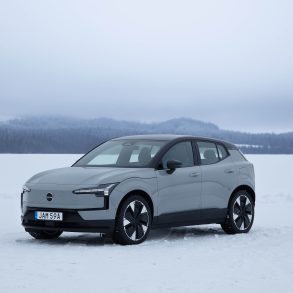
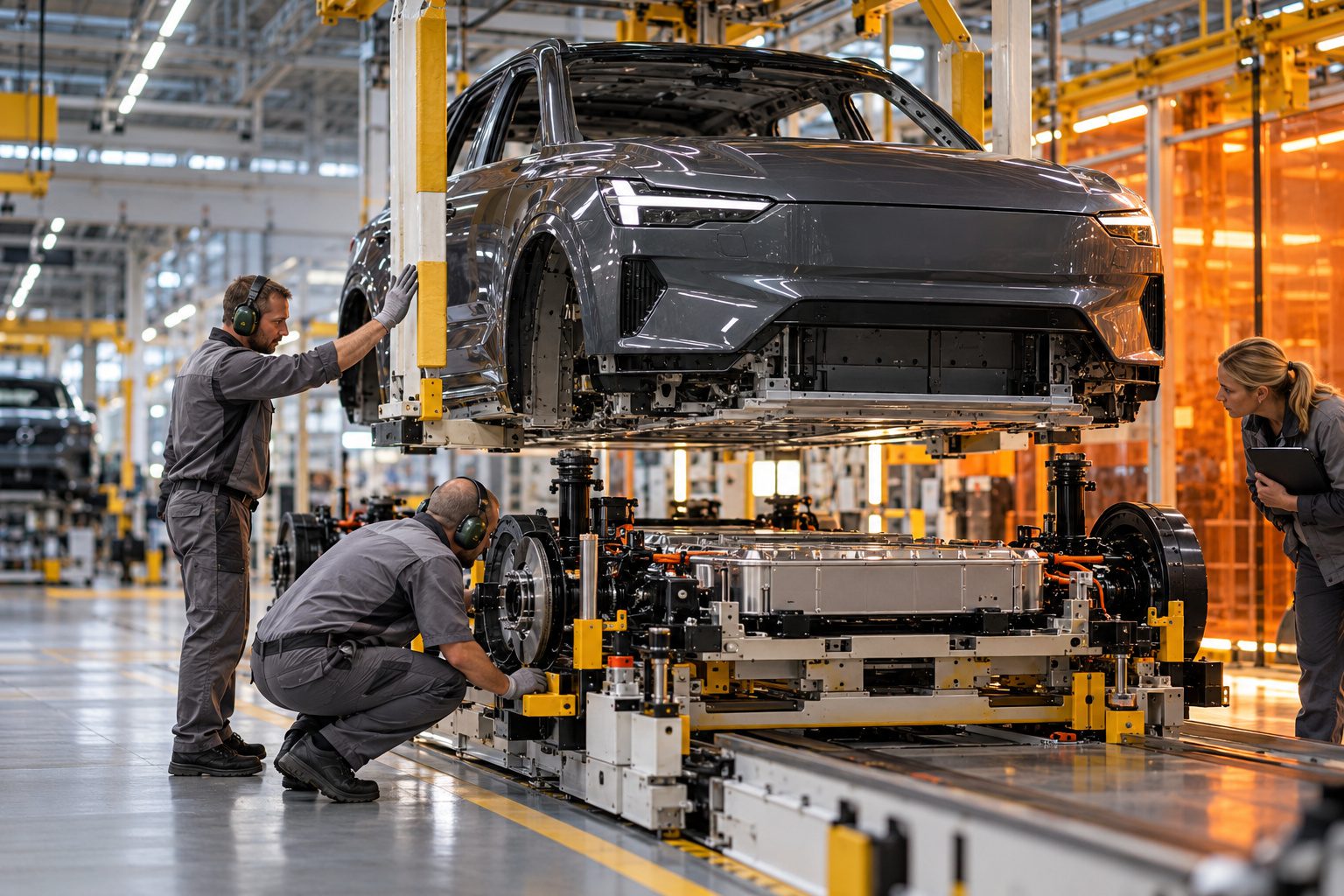
Battery-electric cars were 45% of Volvo’s European sales in the quarter. The new EX60 has more than 50,000 European orders, although the release says its cell-to-body construction has made the production ramp slower than planned. In July GCBC read Volvo’s first EV-majority quarter as evidence that where electric cars stall depends on the market, and on whether it kept its incentives. The third quarter fits that reading on both sides of the Atlantic.
Revenue in China fell by almost 50% from a year earlier, under what the release calls hypercompetition from new Chinese brands and severe pricing pressure. Volvo’s plan there is six China-specific models built with Geely, with the first two revealed and put into production in mid-2027.
The cuts land in Sweden
About 2,500 jobs go, 2,000 of them in Sweden, through ended consultant contracts, attrition and targeted exit packages. They are part of a further SEK 5 billion cut in indirect spending and variable costs, with the full effect by the end of 2027. The company will concentrate on five dedicated Volvo plants and is studying multi-brand assembly with Geely at Chengdu in China and Ghent in Belgium.
What to watch
The full-year report, which Volvo’s financial calendar lists for February 4, 2027, should show whether the US credits take a second revaluation and whether the savings are arriving on schedule. Before then, the surprise would be another carmaker booking a CAFE credit loss in its own results, which would turn Volvo’s line item into an industry-wide cost.