
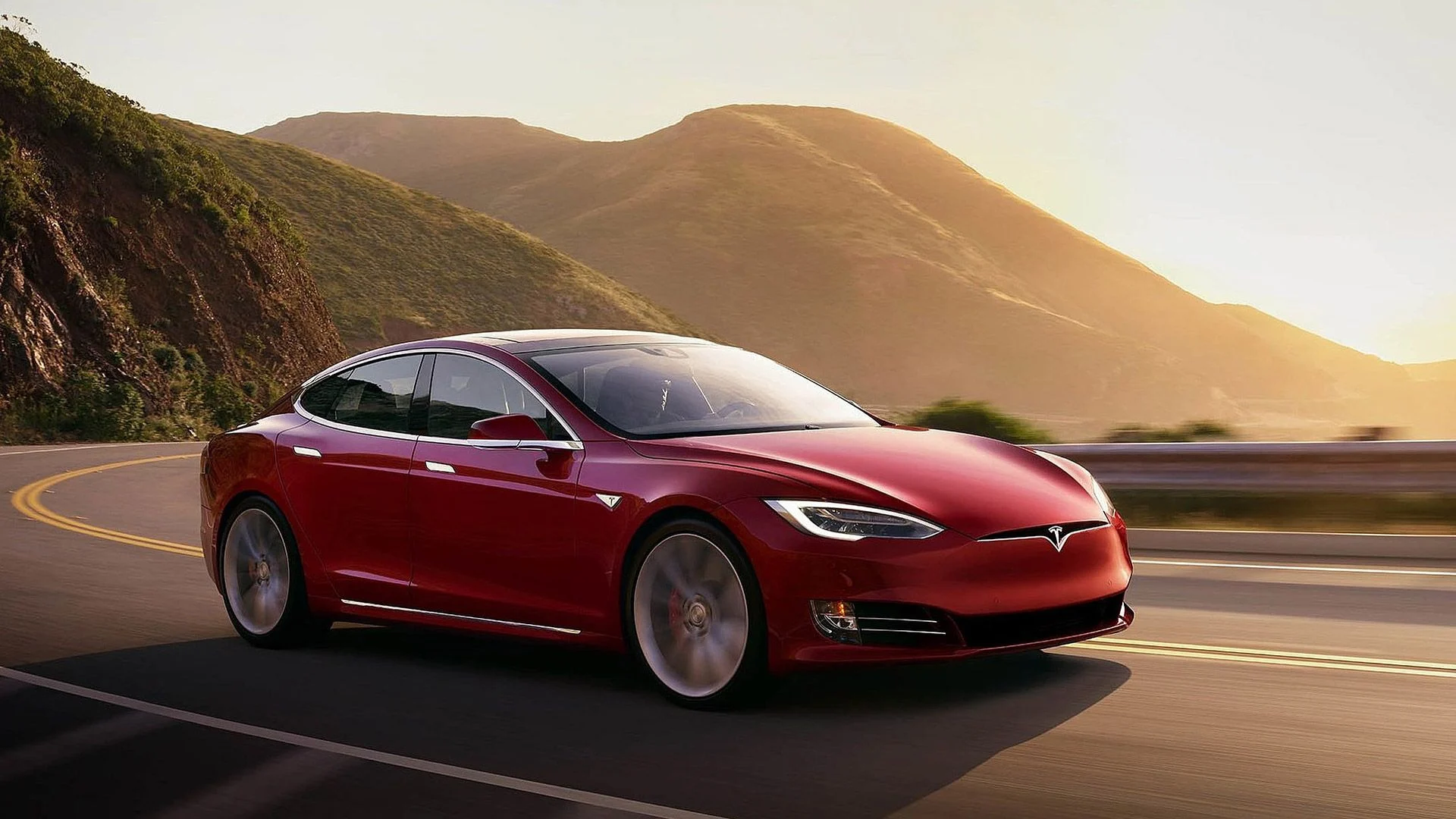
Tesla Model S
The Tesla Model S is a full-size, all-electric luxury sedan that did more to accelerate the global EV transition than any single vehicle in automotive history. Introduced by Tesla, Inc. in 2012, the Model S proved that electric cars could deliver long range, serious performance, and genuine luxury without compromise. It earned Motor Trend’s 2013 Car of the Year, the first EV to win the award, and forced every major automaker to accelerate their electrification programs.
On January 28, 2026, CEO Elon Musk announced on Tesla’s Q4 2025 earnings call that Model S production will end in Q2 2026. After nearly 14 years of continuous production, Musk described the move as an “honorable discharge” for the vehicle that built Tesla’s reputation. The Fremont, California factory space currently used for Model S and Model Xproduction will be converted into a manufacturing facility for Tesla’s Optimus humanoid robot, with a long-term target of one million units per year.
Tesla Model S Overview
The Model S was unveiled in 2009 and first deliveries reached customers in June 2012, following the original Tesla Roadster. Where the Roadster proved the concept, the Model S proved the business case. It introduced the large central touchscreen interface that now defines modern automotive interiors, pioneered over-the-air software updates that could add features and fix problems remotely, and delivered EPA-rated ranges that made electric vehicles practical for daily use and road trips alike.
Performance variants pushed the boundaries of what sedan buyers thought possible. The P85D introduced dual-motor all-wheel drive. The P100D delivered sub-2.5 second 0-60 times that embarrassed supercars costing five times as much. The Plaid, introduced in the 2021 refresh, pushed past 1,000 horsepower with a tri-motor configuration. Each generation expanded both the performance envelope and the customer base.
Tesla had already been quietly phasing out Model S orders in China and Europe through early 2025. By its final year, the Model S and Model X combined represented roughly 3% of Tesla’s 1.64 million global deliveries, with the Model 3and Model Y accounting for 97%. The vehicles that built the brand had been eclipsed by the vehicles that scaled it.
End of Production: What It Means
The decision to end Model S production reflects Tesla’s broader strategic pivot away from traditional vehicle manufacturing and toward autonomy, robotics, and artificial intelligence. Musk stated that the Model S and Model X platforms are too old to support Tesla’s unsupervised Full Self-Driving capabilities, making them incompatible with the company’s vision of an autonomous fleet. Tesla will continue to service existing Model S vehicles and provide software updates, though no timeline for long-term support has been disclosed.
The Model S currently starts at $94,990 for the AWD variant and $109,990 for the Plaid. Buyers interested in purchasing one of the last units off the line have a closing window before production wraps in Q2 2026.
Whatever you think of Tesla’s direction from here, the Model S earned its place in automotive history. It changed how the industry thought about electric vehicles, forced billions of dollars in competitor investment, and proved that an EV startup could build a car that luxury sedan buyers actually wanted. The production line is ending. The impact isn’t.
Tesla Model S Sales Figures
The Model S was well received across major global markets, particularly the United States, Europe, and China. Sales peaked in the mid-2010s before the arrival of the more affordable Model 3 in 2017 shifted Tesla’s volume story dramatically. By 2025, Tesla no longer broke out individual Model S sales figures, bundling them with Model X and Cybertruck deliveries under “other models,” which totaled approximately 50,850 units for the year. The data below tracks the Model S through its full production history.
Tesla Model S U.S Sales Data & Charts
US Monthly Sales
US Annual Sales
| Year | Sales Units |
|---|---|
| 2015 | 18,645 |
| 2016 | 24,000 |
| 2017 | 26,800 |
| 2018 | 29,950 |
| 2019 | 14,425 |
| 2020 | 20,301 |
| 2021 | 11,556 |
| 2022 | 90,473 |
| 2023 | 26,701 |
| 2024 | 15,901 |
| 2025 | 9,129 |
| 2026 | 7,000 |
US Annual Growth
Tesla Model S Canada Sales Data & Charts
Canada Monthly Sales
Canada Annual Sales
Year Sales Units
2013
650
2014
850
2015
1,800
2016
1,600
2017
1,800
2018
1,200
2019
1,000
2020
400
2021
600
2022
800
2023
1,000
2024
1,699
2025
748
2026
265
Canada Annual Growth
Tesla Model S Europe Sales Data & Charts
Europe Annual Sales
| Year | Sales Units |
|---|---|
| 2013 | 3,911 |
| 2014 | 8,841 |
| 2015 | 15,169 |
| 2016 | 11,564 |
| 2017 | 16,026 |
| 2018 | 17,386 |
| 2019 | 8,635 |
| 2020 | 5,562 |
| 2021 | 456 |
| 2022 | 1,960 |

Outstanding work! However, you are double counting in 2012.
2655 is a good number for the year, but the 350 would be included in that, and it's wrong as well. Actual number should be ~240-244, plus maybe 10-20 built in June.
Here is the shareholder letter for 2012. Look at the top of page 2 –
http://files.shareholder.com/downloads/ABEA-4CW8X0/2622950732x6836506x637040/4e3260f0-b711-47df-9c9e-16a8dda99a19/Q4%2712%20SHL%20022013%20final.pdf
For my part, my estimates are 2386 in Q4, 244 Q3 and 18 in June.
If your source for 2012 is RL Polk, it's conceivable that some of the discrepancy comes from Roadsters, though 355 seems like a high number even so.
Did some more math and made some adjustments. If 2650 were delivered in 2012, and 95 went to Canada (based on registration data), then 2555 were sold in the U.S. And if 2400 were sold in Q4, and 95 of those went to Canada, that leaves 2305 for the Q4 and 250 for the Q3. If, if, if.
Seems reasonable to me. All Canadian deliveries were in late December. I had no clue as to the precise number though because the number of Canadian VIN's I had in my dataset was statistically insignificant, and in fact even now its almost impossible for me to sort them out from the overall sales.