November 21, 2026
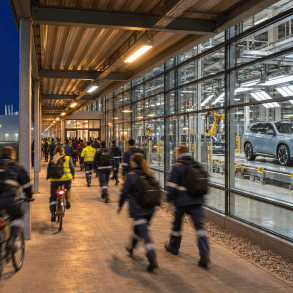
More than 150,000 workers at about 100 companies across Germany stopped work for 24 hours on Friday, November 20, IG Metall’s executive said. BMW and Audi plants in Bavaria and the shipyards in the north were among the main sites, and North Rhine-Westphalia had the most companies on strike. It was the first full-day strike in the metal and electrical industry since 2018, in a pay round that covers about 3.7 million workers, Reuters reported, at Mercedes-Benz and Audi among others. The union says it will keep going on Monday at more companies, Opel and Ford among them.
What the two sides are fighting over is the date of the first permanent raise. Gesamtmetall’s published offer leaves pay tables where they are until July 2028, with only a one-off payment before then that a company in trouble can hold back. That is close to the two-year freeze Volkswagen asked of its own workforce the day before the strike. The question is whether Germany’s carmakers and their suppliers get two years of flat pay while they contend with what Reuters calls high costs and weak demand.
The offer on the table
On October 27 the employers’ federation tabled one offer in five bargaining regions at once, which it says is a first. It sets a one-off payment of 1% of average annual pay under the agreement in July 2027. Pay tables would rise 1.3% in July 2028, in a deal running to the end of that year.
Reuters describes the one-off as a payment financially troubled companies could withhold. Gesamtmetall calls it differentiable under an existing opt-out mechanism, Automatic Differentiation, and wants that mechanism widened and made permanent. It also says any settlement must include a new plant-level instrument to secure investment, innovation, sites and jobs.
Why the union went to a full day
IG Metall wants 5% over twelve months, protection for jobs and sites, and profit-sharing in the parts of the industry that are doing well, and it calls the employers’ proposal a pay cut in real terms. The full-day strike is a bigger step than the short warning strikes that came before it. The union pays strike money to members who take part, dpa reports, and in the metal and electrical industry it is the last step before a ballot on open-ended strikes, ZDF reports. The only other time the union used it, in 2018, about 500,000 workers at 250 companies took part.
Employers say the walkouts cost a sector already in crisis. The Bavarian metal and electrical employers’ association said the companies hit suffer significant damage, and Südwestmetall called the full-day strike an escalation and the wrong way to go.
Why the carmakers want the time
Volkswagen Group ended its third quarter with an operating loss on a Porsche write-down, as GCBC’s Q3 piece on the group reported. In the same week IG Metall first said it was planning the strike, Reuters notes, Mercedes-Benz was halting all investments in its German plants and exploring site closures.
Volkswagen’s own table
Volkswagen AG bargains under its own company agreement, and its list of demands, published on November 19, goes further than the regional offer. The company says the cost measures it agreed in 2024 are no longer sufficient on their own. Volkswagen wants pay frozen for 2027 and 2028, where the regional offer at least carries a one-off and a raise in mid-2028.
The company also wants to scrap an additional payment worth 27.5% of average monthly earnings and a monthly allowance of €167. The 35-hour week would become adjustable to how busy the plants are, with no extra pay for longer weeks and pay cut in proportion for shorter ones.
The week ahead
Next week puts all three tables in play. On Monday the full-day strikes resume at more companies. On Tuesday, November 24, Volkswagen’s talks open in Emden, and IG Metall’s Berlin-Brandenburg district has called full-day strikes for the same day. For Wednesday, November 25, Südwestmetall has invited the union to talks in Mannheim, dpa reported. The union has not said it will attend: its Baden-Württemberg leader said the proposal was on the table, but what counts is whether employers are ready to move.
Emden will show whether IG Metall will entertain a freeze at Volkswagen while it strikes against something close to one everywhere else. Mannheim, if the union goes, will show whether employers move the first raise into 2027. A call for a ballot would mean the union has decided 24 hours is not enough. IG Metall accepting flat pay tables until July 2028 would be the surprise, and the carmakers’ win.