April 25, 2026
The Detroit full-size electric pickup program arrived in 2021 as the anchor product of the post-ICE future. Inside seven days in April 2026, three of its core participants walked away from the thesis in the same direction, and the industry lost the pretense that the retreat was episodic.
General Motors went first on April 21. Crain’s Detroit Business reported that the next-generation Silverado EV, Sierra EV, Escalade IQ refresh, and Hummer EV refresh have all been suspended indefinitely, with suppliers told there is no new timetable. InsideEVs confirmed the scope across all four nameplates the same day. The programs were tracking toward a 2028 start of production. They are now off the capital-allocation table.
The Q1 run rate is the empirical case for the decision. GM delivered roughly 6,300 combined units across the Silverado EV, Sierra EV, Escalade IQ, and Hummer EV over three months. Factory Zero in Detroit-Hamtramck was idled for four weeks in mid-March with 1,300 workers furloughed. Cumulative GM EV losses sit at $7.6 billion. The company is now in supplier conversations on a PHEV Silverado and Sierra at its Michigan ICE plant and on extended-range EV powertrains for the same platforms. That is the definition of a pivot rather than a pause.
Volkswagen closed Chattanooga’s EV chapter first
Five days before the GM announcement, Volkswagen posted the European half of the same story. Bloomberg reported a Q1 writedown of up to $600 million, roughly €500 million, against the end of ID.4 production at Chattanooga. That is 60 to 75 percent of the original $800 million Chattanooga EV retool, written off less than three years into the production life of VW’s only US-built electric vehicle. Electrive’s coverage put the ID.4’s US Q1 sales at minus 96 percent year over year.
What makes the VW story structurally different from the 2024 and 2025 EV cancellations is the reuse. The Chattanooga line is not being mothballed as stranded capacity. It is being reallocated to the 2027 Atlas and Atlas Cross Sport ICE crossovers, the gas SUVs that are already the profitable core of VW’s US business. The replacement US EV is listed as a maybe in the company’s own Q1 commentary. For a German OEM that spent the Diess era positioning Wolfsburg as a US EV exporter, pivoting Chattanooga to more Atlas production is the plainest possible signal about where post-EV-credit capital is going.
Ford’s reorganization is the structural admission
Three days earlier, Ford made its own move. CNBC broke on April 15 that Doug Field, chief EV, digital, and design officer, would be leaving over the following month. Field was hired in 2021 from Apple, via Tesla before that, as the hiring announcement that was supposed to signal Ford’s shift from a truck company with EVs into a software-defined manufacturer. His exit was announced alongside the dissolution of the standalone EV unit. EV, digital, and design all fold into a new Product Creation and Industrialization organization under COO Kumar Galhotra, with a stated 8 percent adjusted operating margin target by 2029.
The Detroit News framing is the one that matters for the next four quarters. Ford is no longer running an EV strategy parallel to its manufacturing strategy. The EV strategy is a subset of the manufacturing strategy, reporting through manufacturing leadership, measured against manufacturing margins. That is the structural admission that started with the $15.5 billion EV asset impairment in March and now completes the reorganization cycle. Alan Clarke, who ran engineering on Ford’s Universal EV Platform team in California, was promoted to VP Advanced Development Projects, which is the specific signal that the skunkworks program continues under a different reporting line.
The trifecta sits on top of a larger retrenchment
The April 15 through April 21 window is the closing bookend, not the opening one. The 2026 running total of announced US and European BEV writedowns and product cancellations now clears $35 billion across five companies. Ford at $15.5 billion. Honda at ¥2.5 trillion and three cancelled North American EVs. Porsche at €3.9 billion. GM carrying $7.6 billion in cumulative EV losses behind the April truck halt. Volkswagen at up to $600 million on Chattanooga alone. GCBC documented the first $35 billion wave in the EV Retreat article published March 19. The April additions are additive to that total, not substitutes for it.
The pattern across all five announcements is identical. Mass-market BEVs cannot be scaled profitably against current US consumer demand at current cost curves. Legacy OEMs are redirecting the capital toward PHEV and EREV bridge architectures, ICE crossovers and trucks that already sell, and China-localized partnerships rather than standalone North American EV platforms. Powertrain pluralism is no longer a talking point on an earnings call. It is a capital-allocation reality through at least 2030.
Rivian is now the only US full-size BEV pickup with a roadmap
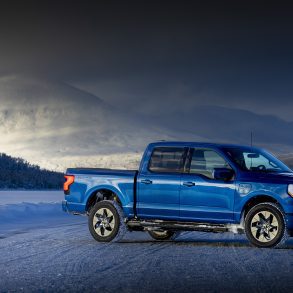
The Detroit Three delivered one clear product-portfolio consequence. With GM’s next-gen Silverado EV, Sierra EV, and Hummer EV refreshes indefinitely on hold, and with Ford’s F-150 Lightning on the same-generation platform the company impaired in March, the R1T is the only US-built full-size battery-electric pickup with an announced forward roadmap. Rivian’s R2 and R3 programs sit on a smaller platform, so the R1T’s forward commitment is now the defining product statement for the US full-size electric pickup category. That is not the market position Rivian was building toward in 2023. It is the market position it inherited this week.
The second-order signal is the GM Factory Zero re-rating GCBC flagged on April 3. The plant that was re-tooled to anchor GM’s full-size BEV future is now indefinitely idle in between the canceled Silverado EV program and a PHEV Silverado that has not yet been greenlit on the same site. Factory Zero does not have a product roadmap that gets it to two-shift operation through 2028. The Factory Zero story has moved from plant utilization risk to stranded-capacity risk.
The capital plan replaces the EV plan
The three decisions between April 15 and April 21 end the 2026 narrative that Detroit EV retrenchment is a series of company-specific quality, warranty, or timing problems. It is a coordinated capital-allocation reset. The structural read for dealer-group CFOs, fleet buyers, and OEM product planners is that the BEV portion of the 2026 to 2028 new-vehicle roadmap is now materially smaller than it looked on January 1, and the PHEV and EREV portion is materially larger than any Detroit OEM had publicly guided toward on January 1. Lease residuals on the affected 2024 and 2025 BEV model years will reflect the narrowing of the forward product pipeline in Q3 used-market pricing. Dealer ordering pools for 2027 and 2028 model years are being rebuilt against PHEV and EREV powertrains that two of the three affected OEMs have not yet shown in a production-car state. This week converted three years of EV program announcements into the 2026 capital plan that replaces them, and it is a different plan than the one Wall Street was modeling on January 1.