April 12, 2026
You have to admire the sheer audacity of the scheduling.
On April 9, BYD opened reservations for the Denza Z9GT across seven European countries. The car costs €115,000 in Germany, roughly $134,500, which happens to be €1,400 less than a Porsche Panamera. It packs a 122.49 kWh Blade 2.0 battery, a 1,140-horsepower tri-motor drivetrain, and over 1,000 kilometers of WLTP range. The Flash Charging system promises 400 kilometers of range in five minutes.
The day before, China Labor Watch published a report alleging that BYD’s $6 billion factory in Szeged, Hungary, the largest Chinese auto investment in European history, operates on forced labor, wage theft, and coached deception of inspectors.
BYD is simultaneously building the most ambitious and most compromised automotive brand launch that Europe has seen in a generation.
The Product Offensive
The Denza Z9GT is not a compliance car and it is not a budget play. It is a direct assault on the Porsche Panamera, the BMW i7, and the Mercedes EQS in their home markets.
| Spec | Denza Z9GT | Porsche Panamera EV (base) |
|---|---|---|
| Price (Germany) | €115,000 | €116,400 |
| Battery | 122.49 kWh (Blade 2.0) | ~100 kWh |
| Power | 1,140 hp (tri-motor) | ~600 hp |
| Range (WLTP) | 1,036 km | ~590 km |
| Fast Charging | 5-min Flash Charging (400 km) | ~22 min (10-80%) |
The pricing positions the Z9GT as a value-performance play that beats the Panamera on every measurable specification. GCBC covered BYD’s Blade 2.0 technology when it was announced in March. This is the first vehicle to bring it to European consumers.
BYD is backing the hardware with infrastructure commitments: 3,000 Flash Charging stations across 30 European countries by end of year. That is an ecosystem play, not a one-car launch.
The Talent Raid
BYD did not send Chinese executives to run the European launch. It hired Europe’s own luxury automotive talent to do it.
| Executive | Previous Role | New Role at Denza |
|---|---|---|
| Lorenzo Soravia | Porsche executive | Denza Europe sales leadership |
| Maria Grazia Davino | Stellantis UK head | Denza UK operations |
| Alberto De Aza | Peugeot executive | Denza Southern Europe |
| Alfredo Altavilla | Former FCA COO | Advisory role |
More than 50 hires from Porsche, Stellantis, Peugeot, and other European brands. These are not junior recruits absorbing Chinese corporate culture. These are the people who built Europe’s luxury automotive sales infrastructure, now deploying it for a Chinese competitor.
The Altavilla connection is particularly notable. The former FCA chief operating officer who helped manage Fiat Chrysler’s European operations is now advising the company that European automakers consider their biggest competitive threat. The institutional knowledge transfer runs in one direction.
The Factory Floor
The product and talent story would be a straightforward competitive narrative if not for what China Labor Watch documented at Szeged.
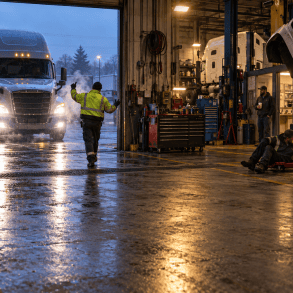
Investigators interviewed 50 workers at the Hungarian plant, which is designed for 300,000 vehicles per year. The allegations are not ambiguous. Workers reported seven-day workweeks with shifts stretching 12 to 14 hours, wage delays extending to three months, and debt bondage through recruitment fees that trapped them at the facility. Many were placed on business visas instead of proper work permits, creating deportation vulnerability. Workers said they were coached to lie to inspectors about conditions and hours.
These are not the complaints of workers adjusting to a demanding but legal workplace. Debt bondage and coached deception of regulatory inspectors describe a system designed to exploit vulnerable labor while evading oversight.
BYD has not responded to the investigation. The company issued no denial, no pledge to audit, no commitment to cooperate. This follows similar allegations at BYD operations in Brazil. The pattern is continental, not local.
The Timing Problem
BYD’s European strategy depends on credibility. The Denza Z9GT is a technical statement that the company can compete at the highest level. The executive hires are a signal that BYD takes European market norms seriously. The forced labor allegations negate both messages in a single news cycle.
EU policymakers are already tightening the regulatory environment for Chinese automakers. The Industrial Accelerator Act requires 70% local content immediately and 50% critical component sourcing within three years. These rules were written with BYD in mind. The Hungary allegations hand Brussels exactly the ammunition it needed to enforce them aggressively.
The timing is also devastating relative to BYD’s domestic position. CPCA data released this week shows BYD’s domestic retail falling 33.1% year-over-year in March, the eighth consecutive monthly decline. BYD wholesale dropped 20.4% to 296,000 units. The company raised its 2026 export target to 1.5 million vehicles. Europe is not a growth opportunity for BYD. It is a survival imperative. The domestic market that built BYD into a global top-10 automaker is contracting underneath it.
What Happens Next
BYD’s silence is a strategic choice, and it is the wrong one. European consumers and regulators will interpret no response as confirmation. Renault’s 36-model counter-offensive does not need to compete on specs alone if it can compete on ethics. European legacy automakers do not need to match Blade 2.0 if they can point to the factory conditions behind it.
The Z9GT is a remarkable car. The hiring spree is a smart strategy. But the forced labor allegations at Szeged are the kind of reputational damage that no product launch, no matter how impressive, can outrun. BYD needs Europe more than Europe needs BYD. That power dynamic requires a level of corporate accountability that, so far, has been absent.