
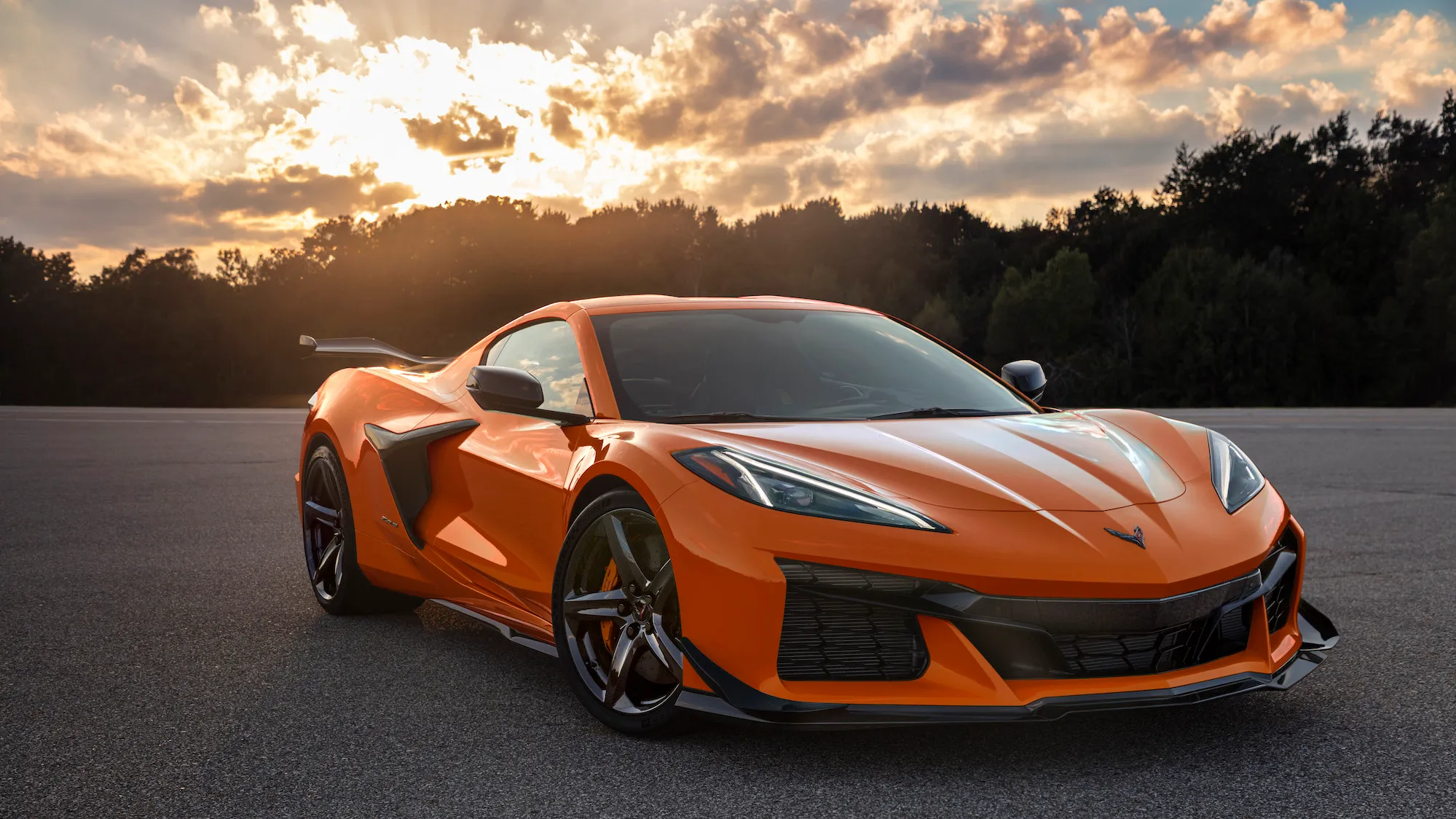
Chevrolet Corvette Sales Figures
Chevrolet Corvette U.S Sales Data & Charts
US Monthly Sales
US Annual Sales
| Year | Sales Units |
|---|---|
| 2005 | 32,489 |
| 2006 | 36,518 |
| 2007 | 33,685 |
| 2008 | 26,971 |
| 2009 | 13,934 |
| 2010 | 12,624 |
| 2011 | 13,164 |
| 2012 | 15,059 |
| 2013 | 17,291 |
| 2014 | 34,839 |
| 2015 | 33,329 |
| 2016 | 29,995 |
| 2017 | 25,079 |
| 2018 | 18,789 |
| 2019 | 17,988 |
| 2020 | 21,627 |
| 2021 | 33,042 |
| 2022 | 37,510 |
| 2023 | 34,354 |
| 2024 | 33,331 |
| 2025 | 24,369 |
| 2026 | 13,417 |
US Annual Growth
Chevrolet Corvette Canada Sales Data & Charts
Canada Monthly Sales
Canada Annual Sales
Year Sales Units
2004
680
2005
1,185
2006
992
2007
787
2008
596
2009
307
2010
364
2011
352
2012
250
2013
324
2014
1,181
2015
1,715
2016
1,758
2017
2,016
2018
1,524
2019
1,710
2020
1,811
2021
2,262
2022
1,561
2023
2,784
2024
2,842
2025
2,711
2026
1,487
Canada Annual Growth
Chevrolet Corvette Europe Sales Data & Charts
Europe Annual Sales
| Year | Sales Units |
|---|---|
| 2000 | 943 |
| 2001 | 928 |
| 2002 | 781 |
| 2003 | 595 |
| 2004 | 21 |
| 2005 | 940 |
| 2006 | 1,187 |
| 2007 | 1,239 |
| 2008 | 1,050 |
| 2009 | 388 |
| 2010 | 596 |
| 2011 | 381 |
| 2012 | 191 |
| 2013 | 158 |
| 2014 | 577 |
| 2015 | 794 |
| 2016 | 762 |
| 2017 | 613 |
| 2018 | 557 |
| 2019 | 672 |
| 2020 | 5 |
| 2021 | 258 |
| 2022 | 743 |
Europe Annual Growth
Corvette Generations
The Corvette’s eight generations span more than 70 years and trace the arc of American performance engineering from fiberglass two-seaters with inline sixes to mid-engine hypercars capable of embarrassing European exotics at the Nürburgring. Each generation is identified by a “C” designation, from C1 through C8.
 C1: First Generation (1953-1962)
The original Corvette debuted at the 1953 GM Motorama in New York as a concept and entered production that same year in Flint, Michigan. Just 300 were built in 1953, all in Polo White with red interiors and powered by the “Blue Flame” 235-cubic-inch inline six-cylinder engine producing 150 horsepower through a two-speed Powerglide automatic. Early sales were sluggish, and Ford’s Thunderbird nearly killed the project before it gained traction. The introduction of a 265-cubic-inch V8 in 1955 transformed the car’s character, and by 1957 the Corvette offered fuel injection and a four-speed manual transmission. Harley Earl’s original design evolved through 1962 across multiple facelifts, with total C1 production reaching approximately 69,015 units. The C1 established the Corvette as a legitimate sports car rather than a boulevard cruiser and set the template for every generation that followed.
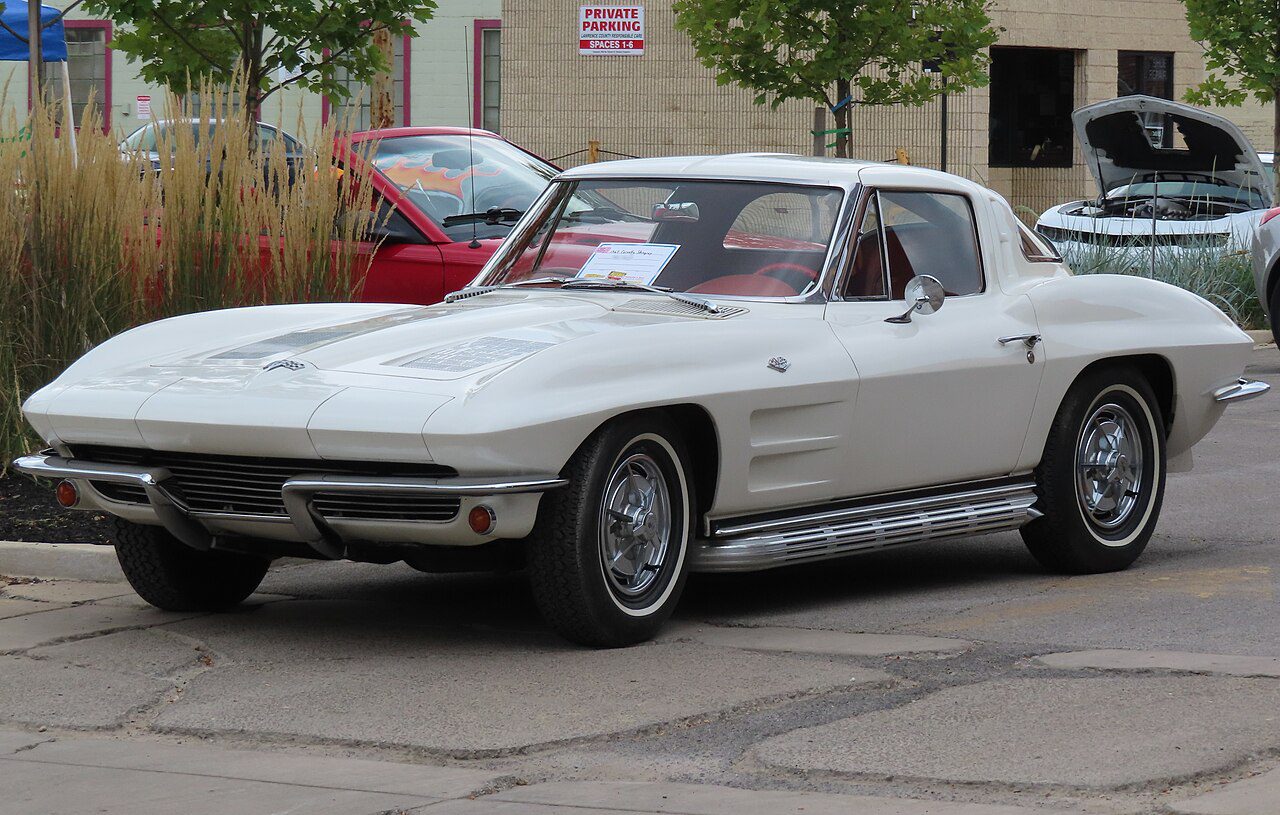 C2: Sting Ray (1963-1967)
The second generation arrived as a complete redesign under the direction of Bill Mitchell and engineering chief Zora Arkus-Duntov, drawing heavily from the 1959 Stingray racing prototype and the XP-720 concept. The 1963 coupe introduced the iconic split rear window, a one-year-only design element that has become the single most collectible feature in Corvette history. The C2 debuted fully independent rear suspension, hidden headlamps, and a driver-focused cockpit that felt more like a European grand tourer than anything else coming out of Detroit. Engine options expanded dramatically, culminating in the 427-cubic-inch big block V8 for 1966-1967. The ultra-rare L88 racing engine of 1967, officially rated at 430 horsepower but widely understood to produce closer to 560, remains among the most valuable powertrains in collector car history. The C2 also introduced the Z06 performance package in 1963, the first use of a designation that continues today. Total production over five model years reached 117,964 units.
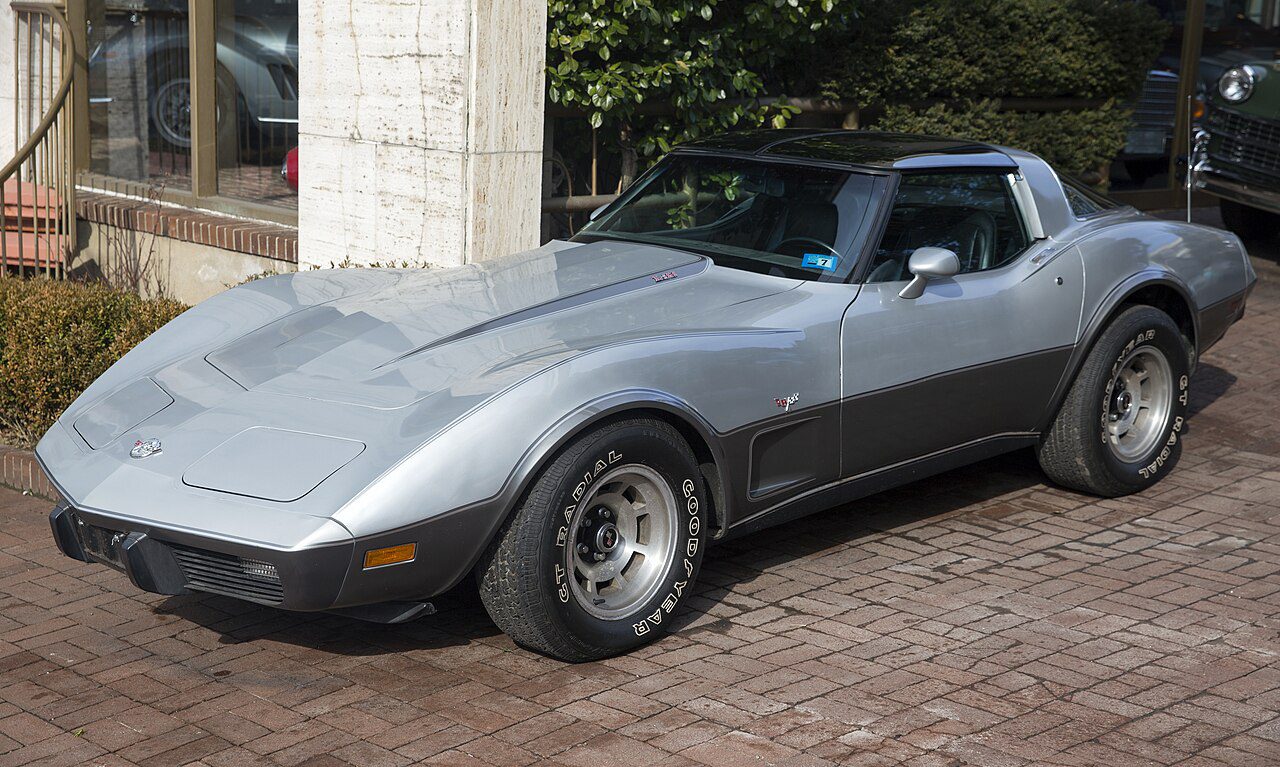 C3: Stingray/Mako Shark (1968-1982)
The longest-running Corvette generation drew its dramatic “Coke bottle” styling from Larry Shinoda’s Mako Shark II concept car. The C3 retained the C2’s ladder frame and independent rear suspension but wrapped them in swooping fender lines and a pinched waist that defined the Corvette’s visual identity for 15 years. Early models offered staggering power, including the 427 and 454 cubic-inch big blocks, with the LS6 454 producing 425 horsepower in 1970. Tightening emissions regulations through the 1970s gradually reduced output, and the 1975 model dropped to 165 horsepower from its base engine, the lowest in Corvette history. The convertible disappeared after 1975, not to return until 1986. Despite the power decline, the C3 became the best-selling Corvette generation at approximately 542,861 total units, with 1979’s production of 53,807 setting a single-year record that stood for over four decades. The T-top removable roof panel, introduced to future-proof against expected convertible legislation that never materialized, became a Corvette signature.
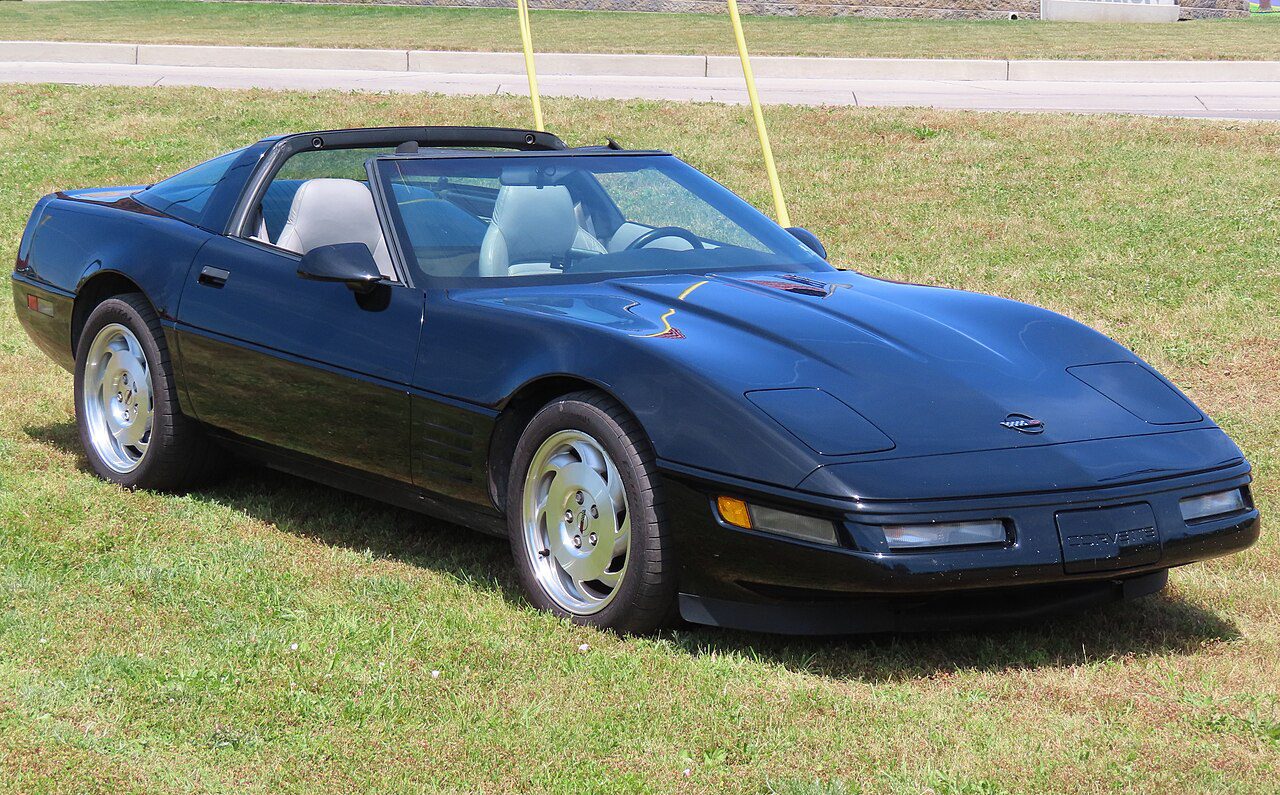 C4: Fourth Generation (1984-1996)
Chevrolet skipped the 1983 model year entirely during the transition from C3 to C4; only one 1983 Corvette exists, now displayed at the National Corvette Museum in Bowling Green. The C4 represented a clean-sheet redesign with a completely new chassis, fully digital instrument cluster (a first for a production sports car), and sharply creased styling that replaced the C3’s curves with angular precision. The clamshell hood and one-piece rear window gave the C4 a distinctly modern profile. Performance gradually climbed back, with the 1990 ZR-1 featuring a Lotus-engineered LT5 dual-overhead-cam V8 producing 375 horsepower, later increased to 405. The ZR-1 earned the nickname “King of the Hill” and proved the Corvette could compete with European GTs on their own terms. The 1996 Grand Sport marked the C4’s send-off with Admiral Blue paint, a white center stripe, and the 330-hp LT4 V8 in a deliberate nod to the original 1963 Grand Sport. Total C4 production reached approximately 358,180 units across a 12-year run.
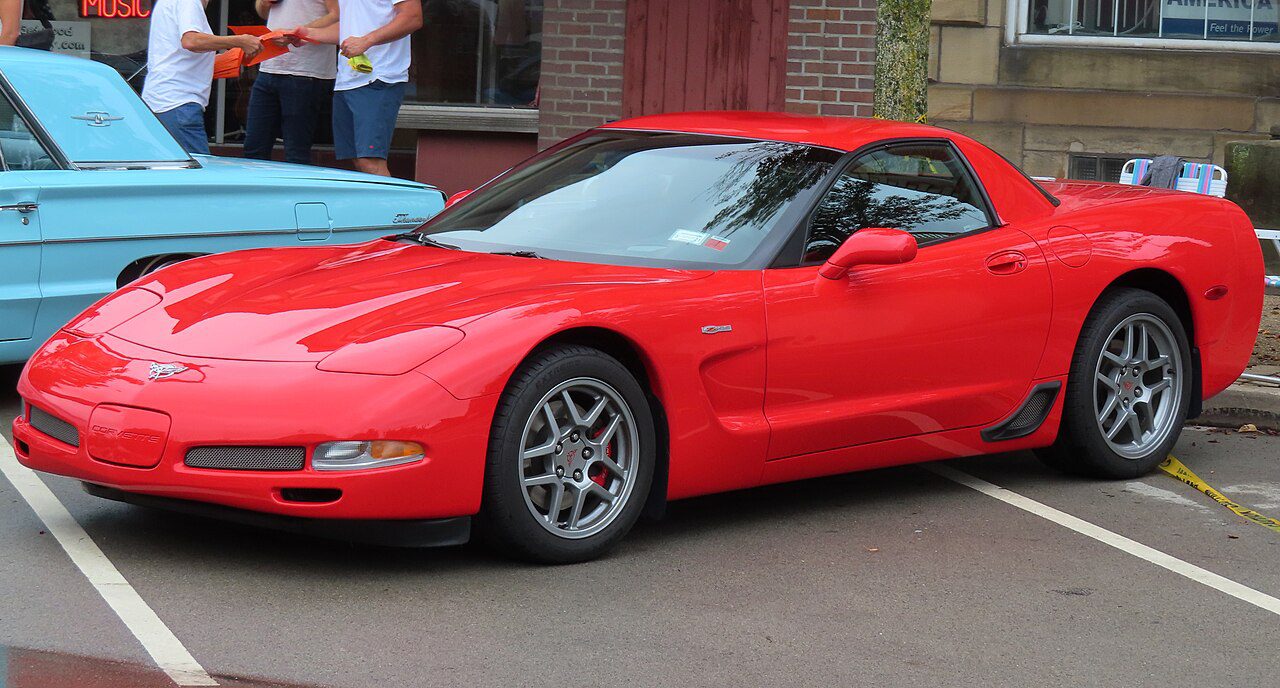 C5: Fifth Generation (1997-2004)
The C5 was a ground-up redesign that addressed nearly every criticism leveled at the aging C4. The new LS1 V8, a 5.7-liter Gen III small block producing 345 horsepower, was lighter, more efficient, and more powerful than anything the C4 offered in its base configuration. A rear-mounted transaxle improved weight distribution to near 50/50, and the hydroformed perimeter frame dramatically increased structural rigidity while reducing weight. MotorTrend named the 1998 Corvette its Car of the Year. The C5 also revived the Z06 nameplate in 2001 with a fixed-roof coupe powered by the LS6 V8, eventually producing 405 horsepower, and the first Corvette to achieve 1.0 g lateral acceleration on the skidpad. Corvette Racing’s C5-R dominated the American Le Mans Series and won at the 24 Hours of Le Mans, cementing the Corvette’s credentials as a genuine endurance racing platform. Total C5 production reached approximately 248,715 units.
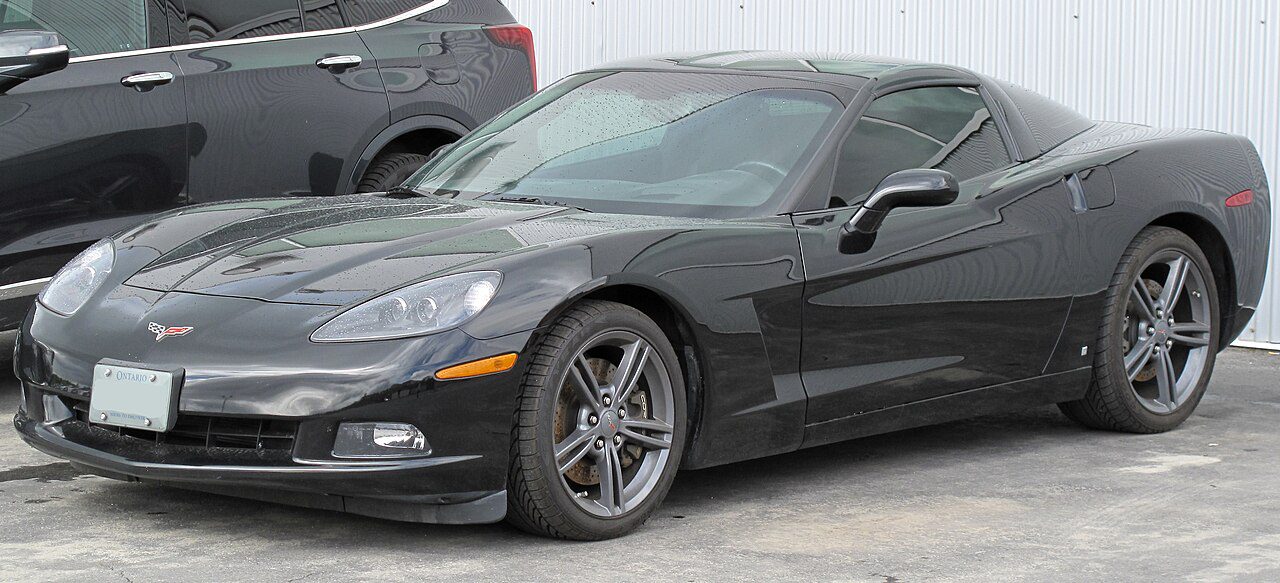 C6: Sixth Generation (2005-2013)
The C6 refined the C5 formula rather than reinventing it, with a shorter overall body, longer wheelbase, and exposed headlamps for the first time since 1962. The base LS2 V8 (later upgraded to the LS3) produced up to 436 horsepower, while the Z06 received the 7.0-liter LS7, producing 505 horsepower from the largest displacement small block Chevrolet had ever built. The 2009 ZR1 pushed further with a supercharged 6.2-liter LS9 making 638 horsepower, making it the most powerful GM production car at the time. Magnetic Ride Control, a head-up display, and keyless entry brought the Corvette’s technology closer to its European competition. Corvette Racing’s C6.R continued the program’s endurance racing dominance with multiple class wins at Le Mans and several ALMS championships. Total C6 production reached approximately 215,100 units.
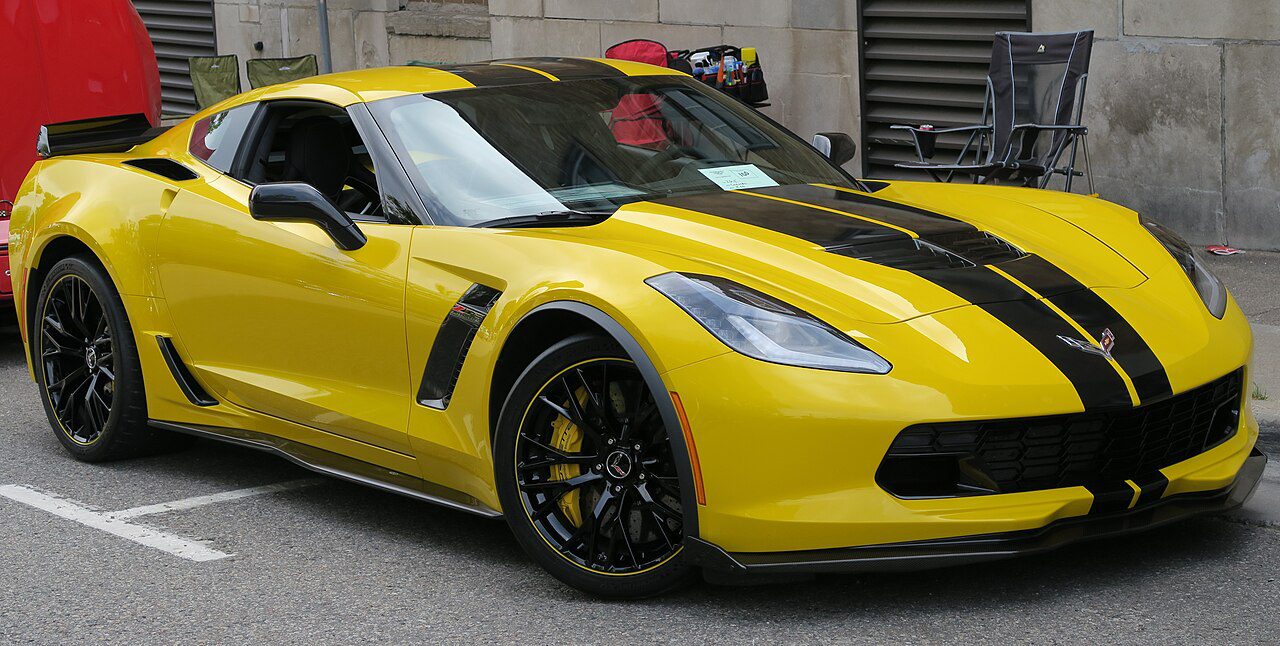 C7: Stingray (2014-2019)
The seventh generation revived the Stingray name for the first time since 1976 and introduced dramatically aggressive styling that broke cleanly from the C5/C6 evolutionary approach. A new LT1 6.2-liter V8 produced 455 horsepower (460 with the performance exhaust), and a seven-speed manual transmission was offered alongside a new eight-speed automatic. The C7 Z06 debuted a supercharged LT4 V8 producing 650 horsepower, and the 2019 ZR1 pushed output to 755 horsepower from a supercharged LT5, making it the most powerful front-engine Corvette ever built. Car and Driver named the C7 to its 10Best list in 2014, and the Corvette C7.R racing program won three consecutive IMSA SportsCar Championship titles from 2016 through 2018 along with a class win at the 2015 24 Hours of Le Mans. As the last front-engine Corvette, the C7 holds particular significance for collectors and enthusiasts who view it as the end of a 60-plus year tradition. Total C7 production reached approximately 189,507 units.
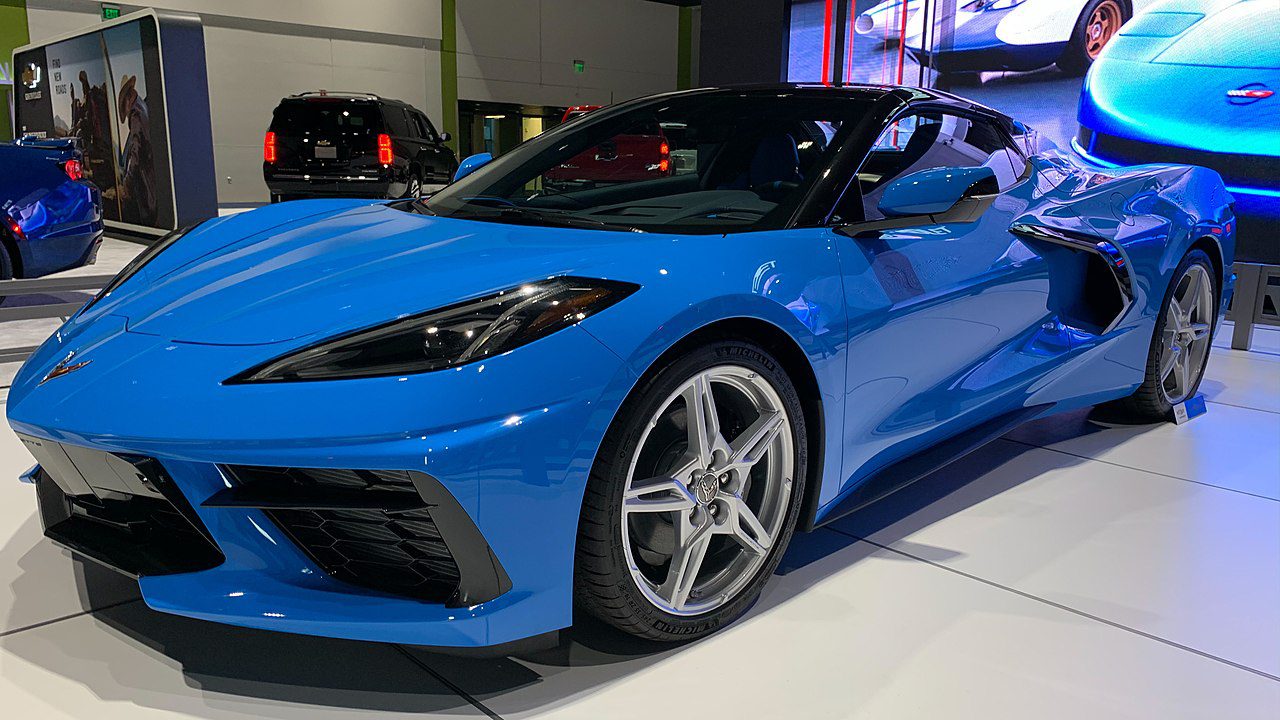
C8: Mid-Engine Revolution (2020-Present)
The eighth generation fulfilled Zora Arkus-Duntov’s decades-old vision of a mid-engine Corvette. Revealed on July 18, 2019, the C8 places its engine behind the passenger compartment for the first time, fundamentally altering the car’s proportions, weight distribution, and handling dynamics. The base LT2 V8 produces 490 horsepower and reaches 60 mph in under 3 seconds, performance that would have required the Z06 or ZR1 badge in previous generations. The dual-clutch eight-speed automatic is the only transmission offered, as the mid-engine architecture eliminated the possibility of a manual gearbox. The C8 expanded the lineup more aggressively than any previous generation: the Z06 brought a flat-plane crank V8 (the LT6) to a Corvette for the first time, the E-Ray added hybrid all-wheel drive, and the ZR1 introduced twin-turbocharging to the flat-plane architecture. The ZR1X, with 1,250 combined horsepower, represents the most powerful Corvette ever built and one of the most powerful production cars in the world. Production peaked at approximately 54,000 units in 2023 before declining as the model enters its seventh year and buyers anticipate the 2026 interior refresh. Despite recent sales softening, the C8 has consistently led the sports car segment in U.S. sales since its launch.
Sales Performance
The Corvette delivered 33,331 units in the U.S. during 2024, a 28.5% increase over 2023’s 25,945 units. Calendar year 2025 proved more challenging, with 24,533 total deliveries representing a 26.4% decline year over year. Multiple factors contributed to the drop: scheduled Bowling Green Assembly Plant closures for retooling the production line to accommodate widebody models, carbon fiber component shortages affecting ZR1 production, a stop-sale recall for Z06 and ZR1 models over fuel spillage concerns, and anticipated buyer waiting for the refreshed 2026 interior. Chevrolet managed to stem the decline in Q4 2025, when sales fell a more modest 10.6% compared to the steep 37.9% Q2 drop.
Despite the year-over-year decline, the Corvette remains the top-selling sports car in the United States and continues to command strong transaction prices across the lineup, with demand for Z06, E-Ray, ZR1, and ZR1X variants consistently outpacing supply.
OK Chevy will give us the Hybrid E Ray in a few years for something north of $100,000 for a nicely equipped model. I happen to own a Beautiful 2014 Z51 with 10,000 miles and I am just not able or willing to take a dive on my baby and pony up $60,000 or more for the E-Ray. However, I would be the first one in line with cash to sign up for a Hybrid retrofit Of my current C7 Corvette as I see being done successfully in France and the UK. Their in Wheel Motors are all of 17 inches in Diameter and 5 inches wide. They are two version from one supplier that produce 50 HP per wheel or 120 HP per wheel. Running off 48 volts and providing power for short errants or clean city driving is available. Are you able to help us learn about these systems and how we can go about recruiting them to America.