November 11, 2026
| Honda, six months to Sept 30 | 2026 | 2025 |
|---|---|---|
| Operating profit | ¥648.7 billion | ¥438.1 billion |
| Motorcycles | ¥439.0 billion | ¥368.2 billion |
| Cars | -¥5.7 billion | -¥73.0 billion |
| Cars before EV-related losses | ¥479.0 billion | ¥150.6 billion |
| EV-related losses | ¥484.8 billion | ¥223.7 billion |
| Hybrids sold worldwide | 494,000 | 454,000 |
| Electric cars sold worldwide | 27,000 | 49,000 |
Source: Honda’s first-half results presentation, November 10, 2026. Sales are retail units.
The plant follows the hybrids
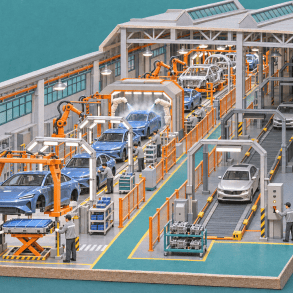
Honda will build its fourth Ohio car plant on land between its East Liberty and Marysville factories, according to its plant announcement. The $3 billion plant is expected to start production in 2029, pending final government approvals, and will lift Honda’s US capacity to about 1.3 million vehicles a year.
In the six months to September, Honda booked ¥484.8 billion of losses from reviewing its electrification strategy, about $3.0 billion at its average rate for the period by GCBC’s arithmetic, or roughly the plant’s price. Those charges erased its car profit. So the new capacity goes to the drivetrain that is selling, in a half when motorcycles, not cars, earned most of Honda’s profit, with help from one-time tariff gains that included refunds.
Worldwide, Honda’s hybrid retail sales rose 9% in the half from a year earlier, while electric-car sales fell by more than 40%. The company credits North American buyers who wanted compact, fuel-efficient cars, hybrids included, as gasoline prices rose, and its North American car sales climbed to 897,000 from 856,000. Hybrid loans already carried the cheapest average new-car payment of any powertrain in the second quarter of 2026, GCBC reported in September.
Ohio’s hybrid-system capacity will rise 250% over the coming years in a wider retooling, as a transmission line there becomes a second hybrid-system line, and the Alabama plant adds production of a new V6 hybrid engine. The new factory can build battery-electric cars if demand turns, the announcement says, but the products Honda names are hybrids and gasoline cars, with large hybrids in the D segment and above arriving from 2029.
Motorcycles earned most of the half’s profit
Operating profit rose 48% in the half from a year earlier, and motorcycles earned about two-thirds of it, by GCBC’s arithmetic.
The weaker yen did the most for the cars, adding ¥87.3 billion to their profit before the charges. Honda’s average rate was ¥159 to the dollar, against ¥146 a year earlier. Higher sales, mainly in North America, added ¥70.7 billion.
Honda’s profit bridge credits tariffs with ¥85.1 billion of the car business’s gain, “due to one-time factors, including refunds.” The company says the first half’s one-time gains will not repeat in the second.
Even so, it raised its full-year operating profit forecast by ¥130 billion to ¥780 billion. It was the second raise of the fiscal year, after August’s lift to ¥650 billion. The new forecast keeps electric-vehicle losses at ¥520 billion for the year, which leaves room for only about ¥35 billion more in the second half. In an exchange filing, Honda told Tokyo it does not expect the Ohio plant to have a material effect on this fiscal year’s results.
Why Ohio, and what Canada got
The November 9 announcement does not mention tariffs. It cites hybrid demand and Honda’s practice of building near its buyers, and says Ohio won on its workforce and the suppliers and development centres nearby. Nearly 99% of the Honda and Acura vehicles sold in the US in 2025 were built in North America, so the plant adds to North American output rather than replacing imports from Japan.
Even with the plant, US capacity will stay below what the company sold there in 2025. Honda and Acura sold 1,431,895 vehicles in the US in 2025, by GCBC’s Honda and Acura figures. And US demand is not shrinking: the Honda brand had its best first nine months since 2021, GCBC reported in October.
Alliston, Ontario, gets C$166 million of retooling, part of a C$867 million commitment made with the federal and Ontario governments as partners, according to Honda Canada’s release. The money keeps more than 4,000 jobs, brings engine making back to the plant and supports Canada’s existing production volumes; the 240,000 new units of capacity go to Ohio.
What to watch
Results for the quarter to December will show whether the ¥780 billion forecast holds once the one-time tariff gains stop. The number to watch is the electric-vehicle charge: anything well past the ¥35 billion left in the forecast would mean the retreat is still costing more than Honda planned. The plant still needs its final government approvals, and Honda has not said when it expects them.