Ford Ranger
Here you will find yearly and monthly United States and Canadian sales figures for the Ford Ranger. The Ranger is Ford’s midsize pickup, positioned between the compact Maverick and the full-size F-150. After ranking as America’s best-selling compact truck for much of its first run, the Ranger left the North American market after 2011 and returned for 2019 as a globally engineered midsize truck, now in its second North American generation following a complete redesign for 2024. It competes with the Toyota Tacoma, Chevrolet Colorado, GMC Canyon, and Nissan Frontier.
- Class: Midsize pickup truck
- Current engines: 2.3L EcoBoost turbocharged four-cylinder (270 horsepower, 310 lb-ft); available 2.7L EcoBoost V6 (315 horsepower, 400 lb-ft); 3.0L EcoBoost V6 (405 horsepower, 430 lb-ft) in the Ranger Raptor
- Transmission: 10-speed automatic
- Drivetrain: Rear-wheel drive or four-wheel drive
- Body style: SuperCrew crew cab, seating five
- Max towing: 7,500 lb
- Chief rivals: Toyota Tacoma, Chevrolet Colorado, GMC Canyon, Nissan Frontier
Ford Ranger Sales in the United States
Ford Ranger sales in the United States tell a story of two eras. In its original compact form, the Ranger sold 120,958 units in 2005 and remained a strong seller before demand faded late in the run, sliding to 23,848 in 2012 as Ford wound the truck down and exited the segment. After an eight-year absence, the Ranger returned for 2019 as a midsize truck and immediately posted 83,571 units, then peaked at 101,485 in 2020. Sales cooled through the model’s changeover, from 94,755 in 2021 to 56,987 in 2022 and a low of 32,334 in 2023, before the all-new sixth generation lifted volume to 51,591 in 2024 and 70,960 in 2025. Through June 2026, Ford had delivered 34,069 Rangers, tracking slightly ahead of the 32,977 sold in the first half of 2025.
Ford Ranger, United States calendar-year unit sales, 2005–2026. 2026 is January–Aug (partial).
Annual sales
| Year | Units | YoY |
|---|---|---|
| 2005 | 120,958 | — |
| 2006 | 92,420 | ▼ 23.6% |
| 2007 | 72,711 | ▼ 21.3% |
| 2008 | 65,872 | ▼ 9.4% |
| 2009 | 55,600 | ▼ 15.6% |
| 2010 | 55,364 | ▼ 0.4% |
| 2011 | 70,832 | ▲ 27.9% |
| 2012 | 23,848 | ▼ 66.3% |
| 2019 | 83,571 | ▲ 250.4% |
| 2020 | 101,485 | ▲ 21.4% |
| 2021 | 94,755 | ▼ 6.6% |
| 2022 | 56,987 | ▼ 39.9% |
| 2023 | 32,334 | ▼ 43.3% |
| 2024 | 51,591 | ▲ 59.6% |
| 2025 | 70,960 | ▲ 37.5% |
| 2026 (Jan–Aug) | 45,925 | ▲ 4.3% YTD |
Monthly sales
| Year | Jan | Feb | Mar | Apr | May | Jun | Jul | Aug | Sep | Oct | Nov | Dec | Total |
|---|---|---|---|---|---|---|---|---|---|---|---|---|---|
| 2005 | 7,634 | 8,214 | 10,764 | 11,793 | 11,098 | 9,947 | 16,223 | 14,129 | 10,105 | 6,354 | 6,263 | 8,434 | 120,958 |
| 2006 | 6,186 | 6,383 | 9,809 | 9,070 | 9,628 | 8,046 | 8,014 | 7,986 | 7,057 | 6,471 | 5,421 | 8,349 | 92,420 |
| 2007 | 4,652 | 5,850 | 7,989 | 7,499 | 9,608 | 7,372 | 5,662 | 4,783 | 4,019 | 4,775 | 4,938 | 5,564 | 72,711 |
| 2008 | 5,546 | 7,431 | 8,620 | 7,585 | 7,239 | 4,882 | 4,677 | 4,920 | 3,915 | 3,891 | 3,311 | 3,855 | 65,872 |
| 2009 | 2,813 | 3,597 | 4,879 | 4,535 | 5,289 | 5,310 | 7,695 | 7,746 | 2,052 | 3,910 | 3,271 | 4,503 | 55,600 |
| 2010 | 4,143 | 3,706 | 4,445 | 5,220 | 6,651 | 5,490 | 5,213 | 4,161 | 3,815 | 4,447 | 3,802 | 4,271 | 55,364 |
| 2011 | 2,848 | 3,780 | 5,833 | 5,370 | 5,713 | 6,488 | 6,410 | 6,192 | 7,154 | 7,270 | 7,056 | 6,718 | 70,832 |
| 2012 | 5,043 | 8,964 | 4,404 | 1,990 | 1,607 | 916 | 413 | 198 | 93 | 74 | 28 | 118 | 23,848 |
| 2019 | 3,099 | 2,975 | 3,347 | 6,786 | 7,830 | 264 | 8,622 | 9,657 | 7,932 | 10,886 | 11,287 | 10,886 | 83,571 |
| 2020 | 6,814 | 8,822 | 5,344 | 4,501 | 10,003 | 10,503 | 9,941 | 8,836 | 9,573 | 8,779 | 8,495 | 9,874 | 101,485 |
| 2021 | 6,102 | 6,954 | 11,110 | 12,801 | 14,303 | 7,101 | 5,960 | 3,271 | 5,104 | 7,218 | 7,839 | 6,992 | 94,755 |
| 2022 | 5,237 | 6,126 | 6,276 | 5,110 | 5,983 | 5,108 | 3,973 | 3,988 | 4,492 | 4,009 | 2,439 | 4,246 | 56,987 |
| 2023 | 2,871 | 3,962 | 4,667 | 4,201 | 4,002 | 4,415 | 4,315 | 2,069 | 1,001 | 453 | 206 | 172 | 32,334 |
| 2024 | 303 | — | 1,615 | 4,327 | 4,703 | 4,227 | 5,386 | 11,046 | 4,458 | 5,231 | 5,039 | 5,256 | 51,591 |
| 2025 | 4,502 | 4,448 | 5,963 | 7,006 | 6,319 | 4,739 | 5,974 | 5,074 | 4,253 | 7,741 | 6,845 | 8,096 | 70,960 |
| 2026 | 5,671 | 5,776 | 6,328 | 5,245 | 4,849 | 6,200 | 5,823 | 6,033 | — | — | — | — | 45,925 |
Ford Ranger Sales in Canada
In Canada the Ranger followed a similar arc. The original truck peaked at 24,211 units in 2008 and then declined toward its 2012 exit. Following the 2019 relaunch, Canadian sales reached 11,201 in 2021 before easing to 4,119 in 2022 and 2,736 in 2023 during the generation change. The redesigned Ranger has since recovered, rising to 5,316 in 2024 and 8,063 in 2025.
Ford Ranger, Canada calendar-year unit sales, 2004–2026. 2026 is January–Jun (partial).
Annual sales
| Year | Units | YoY |
|---|---|---|
| 2004 | 8,775 | — |
| 2005 | 10,775 | ▲ 22.8% |
| 2006 | 17,198 | ▲ 59.6% |
| 2007 | 23,386 | ▲ 36.0% |
| 2008 | 24,211 | ▲ 3.5% |
| 2009 | 20,715 | ▼ 14.4% |
| 2010 | 19,653 | ▼ 5.1% |
| 2011 | 16,381 | ▼ 16.6% |
| 2012 | 3,716 | ▼ 77.3% |
| 2019 | 6,596 | ▲ 77.5% |
| 2020 | 10,840 | ▲ 64.3% |
| 2021 | 11,201 | ▲ 3.3% |
| 2022 | 4,119 | ▼ 63.2% |
| 2023 | 2,736 | ▼ 33.6% |
| 2024 | 5,316 | ▲ 94.3% |
| 2025 | 8,063 | ▲ 51.7% |
| 2026 (Jan–Jun) | 4,112 | ▲ 52.9% YTD |
Monthly sales
| Year | Jan | Feb | Mar | Apr | May | Jun | Jul | Aug | Sep | Oct | Nov | Dec | Total |
|---|---|---|---|---|---|---|---|---|---|---|---|---|---|
| 2004 | 533 | 526 | 848 | 963 | 789 | 856 | 714 | 889 | 812 | 710 | 603 | 532 | 8,775 |
| 2005 | 419 | 496 | 689 | 932 | 796 | 982 | 1,757 | 1,175 | 719 | 847 | 1,070 | 893 | 10,775 |
| 2006 | 813 | 916 | 1,759 | 2,194 | 1,370 | 1,316 | 1,228 | 1,674 | 1,689 | 1,541 | 1,325 | 1,373 | 17,198 |
| 2007 | 897 | 1,227 | 2,451 | 3,028 | 2,561 | 1,922 | 1,576 | 2,501 | 1,908 | 2,133 | 1,763 | 1,419 | 23,386 |
| 2008 | 1,398 | 1,637 | 2,449 | 2,762 | 2,340 | 2,042 | 1,812 | 2,379 | 1,565 | 1,916 | 2,268 | 1,643 | 24,211 |
| 2009 | 999 | 1,022 | 1,780 | 1,505 | 2,116 | 3,067 | 2,528 | 2,755 | 1,422 | 1,136 | 1,010 | 1,375 | 20,715 |
| 2010 | 1,161 | 1,757 | 2,280 | 2,070 | 1,771 | 2,288 | 1,877 | 1,879 | 1,483 | 836 | 1,088 | 1,163 | 19,653 |
| 2011 | 903 | 1,041 | 1,652 | 1,586 | 1,286 | 1,351 | 1,727 | 1,792 | 1,647 | 1,126 | 1,264 | 1,006 | 16,381 |
| 2012 | 650 | 687 | 767 | 499 | 393 | 235 | 164 | 120 | 90 | 23 | 88 | 0 | 3,716 |
| 2019 | 263 | 239 | 253 | 559 | 559 | 510 | 811 | 811 | 738 | 665 | 579 | 609 | 6,596 |
| 2020 | 585 | 532 | 586 | 779 | 708 | 780 | 1,388 | 1,325 | 1,327 | 972 | 884 | 974 | 10,840 |
| 2021 | 666 | 666 | 766 | 1,417 | 1,289 | 1,419 | 992 | 1,039 | 993 | 641 | 641 | 672 | 11,201 |
| 2022 | 405 | 386 | 445 | 411 | 411 | 433 | 281 | 324 | 297 | 242 | 242 | 242 | 4,119 |
| 2023 | 217 | 197 | 229 | 247 | 272 | 274 | 195 | 224 | 197 | 238 | 228 | 218 | 2,736 |
| 2024 | 391 | 373 | 375 | 592 | 592 | 540 | 409 | 409 | 374 | 453 | 394 | 414 | 5,316 |
| 2025 | 448 | 407 | 430 | 482 | 460 | 462 | 780 | 744 | 746 | 1,115 | 921 | 1,068 | 8,063 |
| 2026 | 721 | 644 | 708 | 656 | 691 | 692 | — | — | — | — | — | — | 4,112 |
Ford Ranger Generations
First Generation (1983-1992)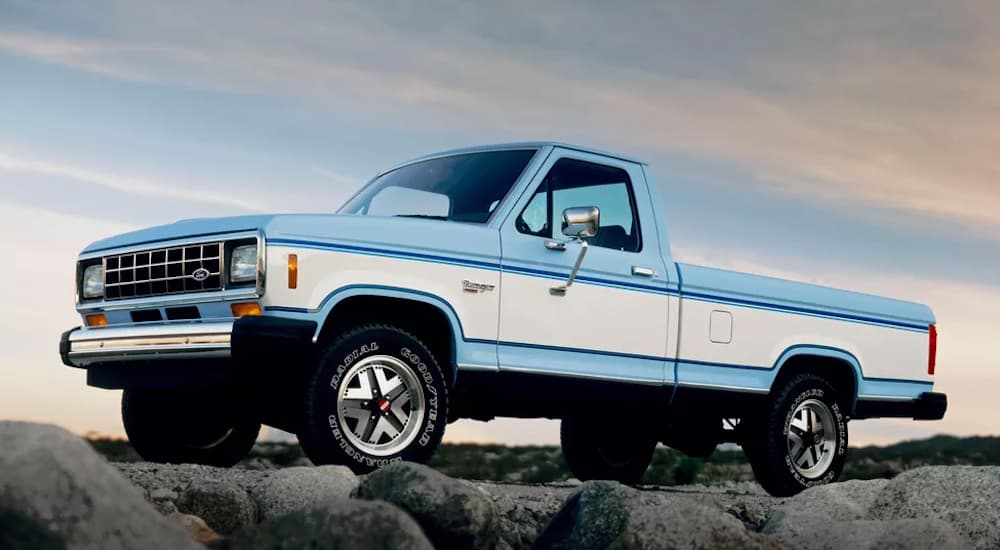
Production began January 18, 1982, with vehicles reaching dealerships by March 1983. The first-generation Ranger was priced at $6,203 initially, approximately $16,570 in inflation-adjusted terms. Ford designed the truck to visually resemble a scaled-down F-150, utilizing similar ladder-frame construction and the company’s Twin I-Beam independent front suspension technology that had been an F-Series hallmark for over 20 years.
The Ranger offered significantly more versatility than the Courier it replaced. Buyers could choose between 6-foot and 7-foot bed lengths, regular cab or SuperCab (introduced in 1986) body styles, rear-wheel drive or four-wheel drive configurations, and four trim levels: base, XL, XLS, and XLT. The base model was deliberately spartan, while the XLT offered upscale appointments including body moldings, pinstripes, and more luxurious interior materials.
Engine options included a 2.0-liter inline-four (72 hp), an optional 2.3-liter inline-four, a 2.3-liter diesel four-cylinder (59 hp), and a 2.8-liter V6 (115 hp). Transmission choices consisted of a standard 4-speed manual, with optional 5-speed manual or 3-speed automatic. In 1985, Ford introduced a fuel-injected 2.3-liter four-cylinder as standard equipment, improving power delivery over the carbureted version.
Ford emphasized corrosion resistance through increased use of aluminum and composite materials in the bed construction. The company marketed the Ranger as a proper truck utilizing proven F-Series engineering principles rather than a car-based utility vehicle. Over 232,000 Rangers sold in 1985 alone, validating Ford’s strategy.
Second Generation (1993-1997)
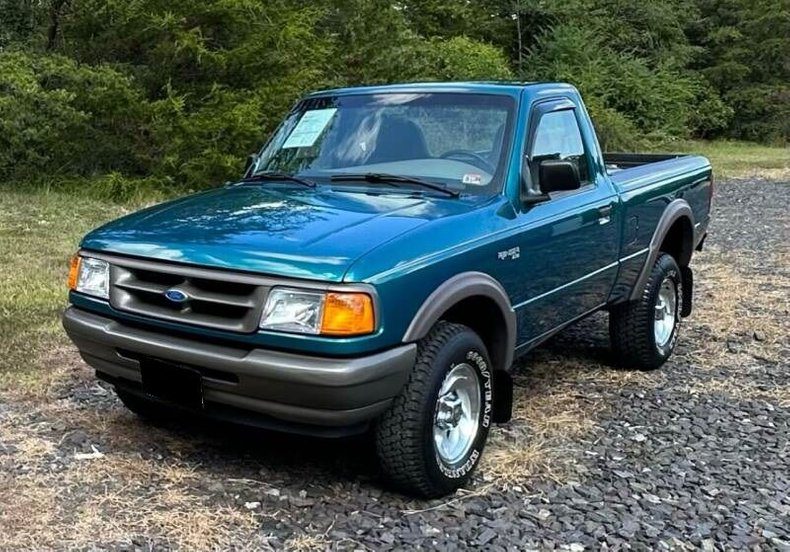
The 1993 redesign brought substantially updated styling while retaining the proven chassis architecture from the first generation. Ford reduced the grille size and added subtle fender flares, creating a more aerodynamic and refined appearance. The update focused on improving reliability, acceleration, and overall driving dynamics rather than revolutionary changes.
This approach resonated with buyers and critics. The second-generation Ranger won Motor Trend’s Pickup Truck of the Year award, recognizing improvements in performance and quality. Ford maintained the previous generation’s cab configurations, bed lengths, and drivetrain options while refining execution details that enhanced the ownership experience.
The second generation represented an evolutionary update rather than a complete reimagining, which proved appropriate given the strong market position Ford had established. The Ranger continued dominating compact truck sales throughout this period, with steady improvements to powertrain options and available features.
Third Generation (1998-2012)
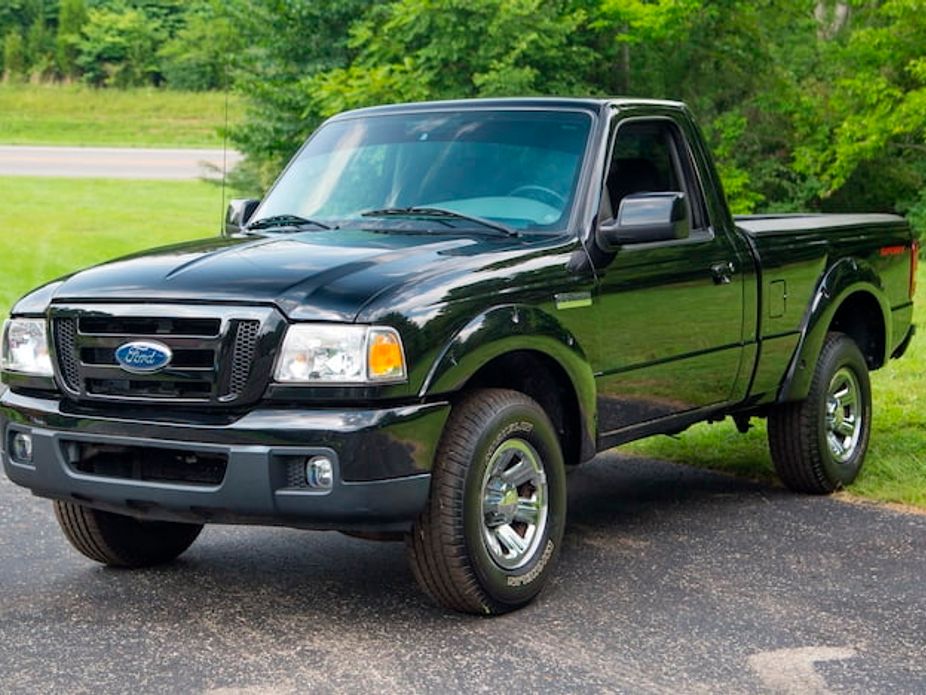
Ford invested in a comprehensive redesign for 1998, significantly updating suspension and steering systems to improve ride quality and handling. The 2.5-liter inline-four base engine delivered a 6% power increase. Body styles expanded to include regular cab, extended cab (SuperCab), and crew cab configurations, all with improved interior packaging and comfort.
Engine choices grew to include a 2.3-liter four-cylinder (143 hp), a 3.0-liter Vulcan V6 (148 hp), and a 4.0-liter Cologne V6 (207 hp) borrowed from the Explorer. Ford offered both 5-speed manual and 5-speed automatic transmissions. The truck’s dimensions increased slightly, providing more cabin space and cargo capacity while maintaining maneuverability advantages over full-size trucks.
Ford introduced the Ranger EV electric vehicle variant in 1998 as a limited production model, primarily for fleet customers in California to meet zero-emission vehicle requirements. The FX4 Off-Road Package (later renamed Off-Road Group) provided enhanced capability with all-terrain tires, heavy-duty shocks, fog lamps, and skid plates.
Throughout its 14-year run, the third generation received three facelifts addressing styling updates and powertrain improvements. Despite these updates, the basic architecture remained largely unchanged from 1998 through 2011. Declining compact truck demand across the segment, not just at Ford, ultimately led to the model’s discontinuation after the 2011 model year. The final North American Ranger was assembled December 22, 2011.
Fourth Generation – International T6 (2011-2019)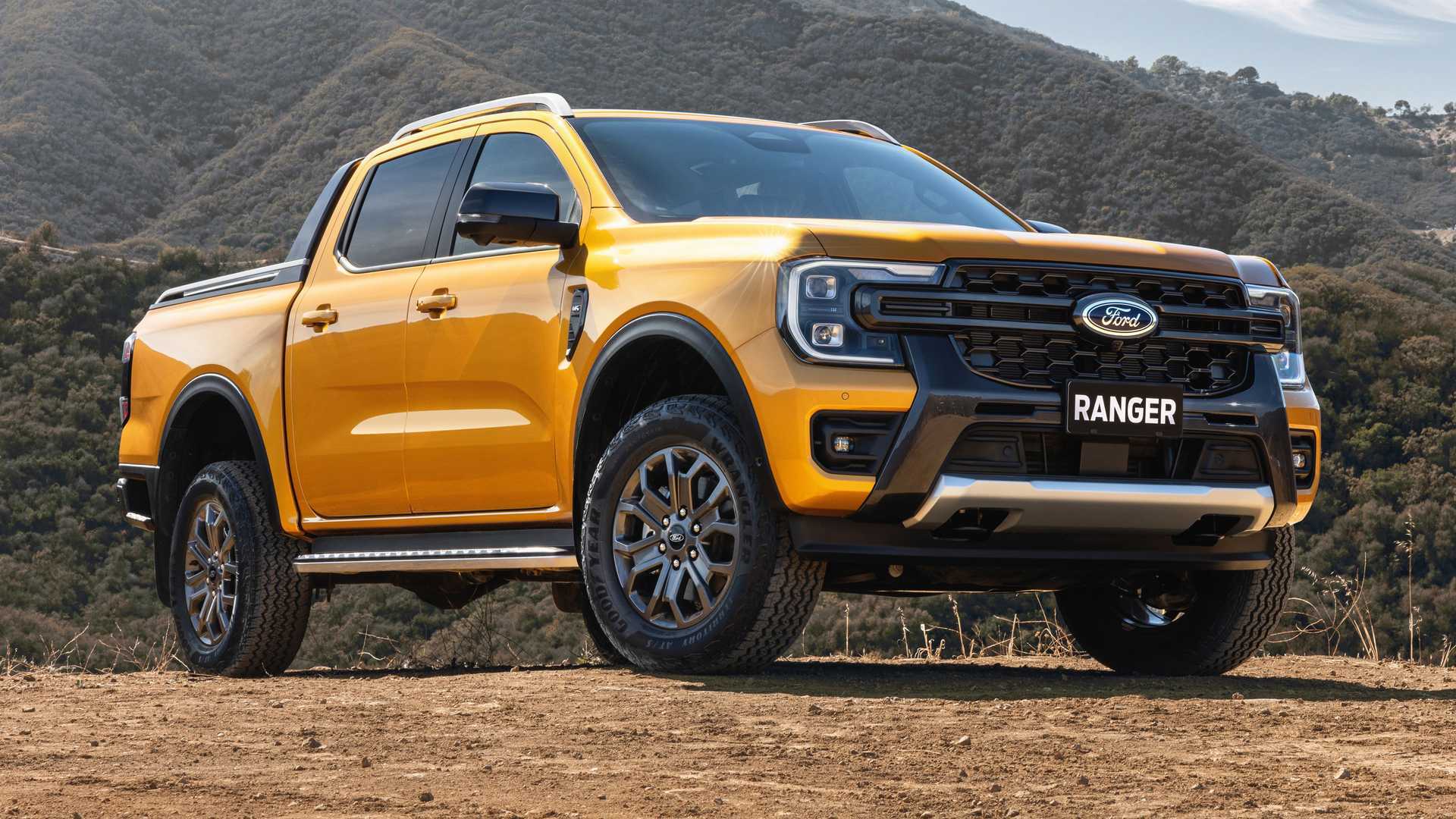
While North America went without a Ranger from 2012 through 2018, Ford Australia engineered an entirely new mid-size truck for global markets designated the T6 platform. This fourth-generation Ranger debuted at the 2010 Australian International Motor Show in Sydney and entered production in 2011, primarily at the joint-venture AutoAlliance Thailand plant in Rayong.
The T6 represented a significant upgrade from previous models sold outside North America. Ford designed the truck for nearly 180 global markets, offering diesel engine options popular in Asia-Pacific, European, and South American markets. Key variants included the Wildtrak flagship with sport trim and uprated interior, and the Raptor performance off-road model introduced in 2018.
This international Ranger competed in the mid-size truck segment rather than the compact category, offering more interior space and payload capacity than previous North American Rangers. The platform also underpinned the Ford Everest SUV sold in numerous markets. While not available in the United States or Canada during this period, the T6’s global success eventually convinced Ford to modify it for North American reintroduction.
Fifth Generation – North American T6 Return (2019-2023)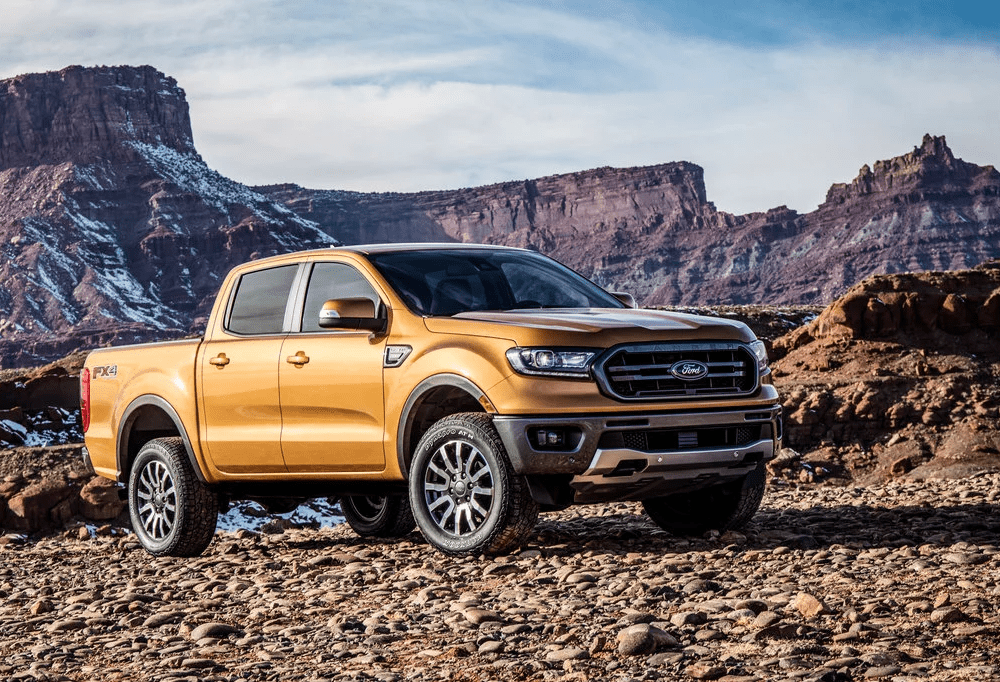
After an eight-year absence, Ford reintroduced the Ranger to North America for the 2019 model year using a modified version of the global T6 platform. The first example was assembled October 22, 2018, at Ford’s Michigan Assembly Plant in Wayne, Michigan. This generation marked the Ranger’s shift from compact to mid-size classification.
The returning Ranger was offered exclusively in crew cab SuperCrew configuration on a 127-inch wheelbase with a 5-foot bed. Ford did not offer the two-door regular cab or extended SuperCab bodystyles in North America, focusing solely on the four-door family-oriented model. Initial engine availability consisted of a single option: a 2.3-liter EcoBoost turbocharged inline-four producing 270 horsepower and 310 lb-ft of torque, paired with a 10-speed automatic transmission. Buyers could choose between rear-wheel drive and four-wheel drive.
Technology features included an 8-inch touchscreen with Ford’s Sync 3 system, Apple CarPlay and Android Auto compatibility, and available driver assistance features through Ford Co-Pilot360. The FX4 Off-Road Package remained available, providing all-terrain tires, upgraded shock absorbers, and skid plates for improved trail capability.
Maximum towing capacity reached 7,500 pounds when properly equipped, with payload ratings up to 1,860 pounds. These capabilities positioned the Ranger competitively against the redesigned Chevrolet Colorado, GMC Canyon, and Toyota Tacoma that had all received major updates during the Ranger’s absence.
The 2019 reintroduction was generally well-received, though reviewers noted that the Ranger’s pricing positioned it closer to base F-150 models than Ford might have intended, creating some internal competition. Nevertheless, the Ranger found its audience among buyers wanting mid-size dimensions with modern technology and respectable capability.
Sixth Generation – Current (2024-Present)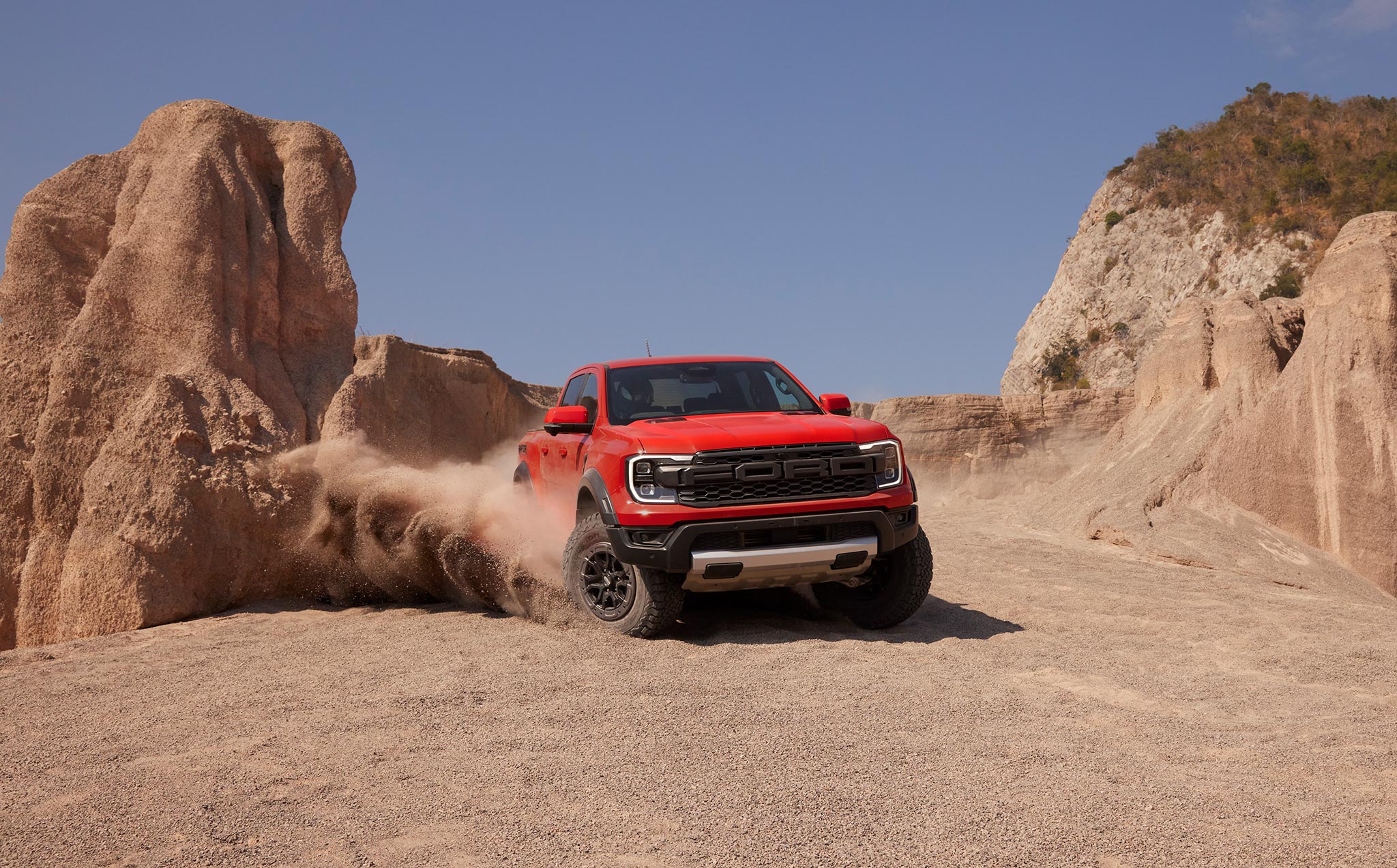
Ford completely redesigned the Ranger for 2024, representing the second generation of the T6-based model for North America and continuing production at Michigan Assembly Plant. The update brought more aggressive exterior styling aligned with current F-150 design language, featuring C-clamp headlights, a prominent grille, and bolder proportions throughout.
Most significantly, Ford expanded engine availability beyond the single 2.3-liter EcoBoost option. The 2024 Ranger offers three powertrains: the carryover 2.3-liter EcoBoost four-cylinder (270 hp, 310 lb-ft), an optional 2.7-liter EcoBoost twin-turbo V6 (315 hp, 400 lb-ft), and a performance-oriented 3.0-liter EcoBoost twin-turbo V6 (405 hp, 430 lb-ft) reserved for the Ranger Raptor variant. All engines pair with a 10-speed automatic transmission.
The crew cab SuperCrew remains the only body style, continuing to offer a 5-foot bed. The extended wheelbase provides 128.7 inches between axles, with 1.5 inches more ground clearance than the previous generation for improved off-road capability. Overall length measures 210.6 inches.
Interior technology received substantial upgrades. Base models feature a 10-inch vertical touchscreen, while higher trims receive a 12-inch display running Ford’s Sync 4A system with cloud-based navigation and over-the-air update capability. The digital instrument cluster measures 8 inches in base models and 12.4 inches in premium trims. An optional Bang & Olufsen 10-speaker audio system provides premium sound quality.
Standard safety equipment includes forward collision warning with automatic emergency braking, lane departure warning, and automatic high beams. Available features include blind-spot monitoring with trailer coverage, 360-degree camera system, adaptive cruise control, and intersection collision avoidance. The Ford Co-Pilot360 suite bundles these technologies on upper trim levels.
Trim levels consist of XL, XLT, Lariat, and Raptor, with pricing starting around $34,500 for base XL models and approaching $58,000 for the Ranger Raptor. The FX4 Off-Road Package remains available on XLT and Lariat models, providing Fox shocks, skid plates, all-terrain tires on 17-inch wheels, and electronic locking rear differential.
Maximum towing capacity holds at 7,500 pounds across the range, while payload capacity reaches 1,805 pounds. These specifications keep the Ranger competitive with the all-new 2024 Toyota Tacoma, updated Chevrolet Colorado, and GMC Canyon that similarly received complete redesigns.
For 2025, Ford made minimal changes beyond discontinuing three exterior colors (Cactus Gray, Iconic Silver, and Hot Pepper Red). The model carries forward with the same powertrain options, technology features, and capability specifications established in 2024.
The current Ranger represents arguably the most complete and competitive model in the nameplate’s 42-year history, offering genuine choice in powertrains, class-leading technology, and build quality approaching F-150 standards in a more manageable mid-size package. Whether Ford can maintain this momentum depends partly on the Ranger’s continued ability to differentiate itself from the increasingly capable F-150 above it and the surprisingly capable Maverick below it.