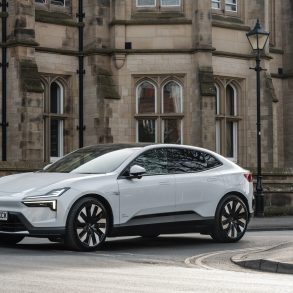
Chevrolet Bolt
Here you will find monthly and yearly United States and Canadian sales figures for the Chevrolet Bolt. The Bolt is Chevrolet’s affordable electric hatchback. Figures include the original Bolt EV, the Bolt EUV that joined it for the 2022 model year, and the returning 2027 Bolt. Production of the first two ended in December 2023, and GM announced the Bolt’s return on October 9, 2025, as a limited-run 2027 model built at Fairfax Assembly in Kansas City, Kansas, with deliveries beginning in early 2026.
- Class: Compact electric hatchback
- Powertrain (2027): Single permanent-magnet drive motor, 210 hp and 169 lb-ft
- Battery: 65 kWh lithium iron phosphate (LFP) pack in prismatic cells; GM quotes 262 miles of range on a full charge
- Charging: 150 kW DC fast charging, 10 to 80 percent in 26 minutes; 11.5 kW AC; first Chevrolet with a native NACS port; vehicle-to-home capable
- Trims: LT and RS
- Built: Fairfax Assembly, Kansas City, Kansas
- Chief rivals: Nissan Leaf, Hyundai Kona Electric, Kia Niro EV
Chevrolet Bolt Sales in the United States
The U.S. chart begins with 579 sales in December 2016, and 2017, the first full year, reached 23,297. Sales eased to 18,020 in 2018 and 16,419 in 2019, then rose to 20,753 in 2020 and 24,827 in 2021, a year that ended with fewer than ten sales a month from October to December during the battery recall. Volume recovered to 38,122 in 2022 as the Bolt EUV joined the range, and 2023 set the peak at 62,044, with March 2023 the best month on the chart at 6,999. With production over, 2024 fell 80.1 percent to 12,367 and 2025 recorded just 52 sales. The 2027 Bolt arrived in early 2026: January to March totalled 791, April to June 3,433 and July to September 3,866, for 8,090 through September 2026, against 46 a year earlier.
Chevrolet Bolt, United States calendar-year unit sales, 2016–2026. 2026 is January–Sep (partial).
Annual sales
| Year | Units | YoY |
|---|---|---|
| 2016 | 579 | — |
| 2017 | 23,297 | ▲ 3,923.7% |
| 2018 | 18,020 | ▼ 22.7% |
| 2019 | 16,419 | ▼ 8.9% |
| 2020 | 20,753 | ▲ 26.4% |
| 2021 | 24,827 | ▲ 19.6% |
| 2022 | 38,122 | ▲ 53.6% |
| 2023 | 62,044 | ▲ 62.8% |
| 2024 | 12,367 | ▼ 80.1% |
| 2025 | 123 | ▼ 99.0% |
| 2026 (Jan–Sep) | 8,090 | ▲ 6,477.2% YTD |
Monthly sales
| Year | Jan | Feb | Mar | Apr | May | Jun | Jul | Aug | Sep | Oct | Nov | Dec | Total |
|---|---|---|---|---|---|---|---|---|---|---|---|---|---|
| 2016 | — | — | — | — | — | — | — | — | — | — | — | 579 | 579 |
| 2017 | 1,162 | 952 | 978 | 1,292 | 1,566 | 1,642 | 1,971 | 2,107 | 2,632 | 2,781 | 2,987 | 3,227 | 23,297 |
| 2018 | 1,177 | 1,424 | 1,774 | 1,161 | 1,161 | 1,161 | 1,247 | 1,403 | 1,299 | 2,098 | 2,017 | 2,098 | 18,020 |
| 2019 | 1,420 | 1,363 | 1,533 | 1,289 | 1,487 | 1,190 | 1,589 | 1,779 | 1,462 | 1,089 | 1,129 | 1,089 | 16,419 |
| 2020 | 1,908 | 2,470 | 1,496 | 449 | 998 | 1,048 | 1,992 | 1,771 | 1,919 | 2,261 | 1,857 | 2,584 | 20,753 |
| 2021 | 2,888 | 2,888 | 3,249 | 3,803 | 3,657 | 3,803 | 1,524 | 1,467 | 1,524 | 8 | 8 | 8 | 24,827 |
| 2022 | 115 | 115 | 129 | 2,374 | 2,286 | 2,286 | 4,841 | 5,027 | 4,841 | 5,369 | 5,155 | 5,584 | 38,122 |
| 2023 | 6,480 | 6,221 | 6,999 | 4,713 | 4,532 | 4,713 | 5,075 | 5,481 | 5,278 | 4,129 | 4,129 | 4,294 | 62,044 |
| 2024 | 2,316 | 2,316 | 2,408 | 4,186 | 464 | 464 | 55 | 62 | 51 | 13 | 16 | 16 | 12,367 |
| 2025 | 4 | 4 | 5 | 37 | 40 | 33 | 0 | 0 | 0 | 0 | 0 | 0 | 123 |
| 2026 | 271 | 250 | 270 | 1,159 | 1,115 | 1,159 | 1,219 | 1,270 | 1,377 | — | — | — | 8,090 |
Chevrolet Bolt Sales in Canada
In Canada the chart begins in January 2017, and 2017 closed at 2,122. Sales grew to 2,604 in 2018 and 4,050 in 2019, held at 4,025 in 2020, and reached 4,668 in 2021 despite no sales from October to December. 2022 climbed to 6,372 and 2023 more than doubled to the peak of 14,075, with August 2023 the best month on the chart at 1,491. 2024 fell to 1,250 and 2025 to 24. The new Bolt has rebuilt volume quickly: January to June 2026 totalled 3,072, with 2,774 of those from April to June, against 24 in the same months of 2025.
Chevrolet Bolt, Canada calendar-year unit sales, 2017–2026. 2026 is January–Sep (partial).
Annual sales
| Year | Units | YoY |
|---|---|---|
| 2017 | 2,122 | — |
| 2018 | 2,604 | ▲ 22.7% |
| 2019 | 4,050 | ▲ 55.5% |
| 2020 | 4,025 | ▼ 0.6% |
| 2021 | 4,668 | ▲ 16.0% |
| 2022 | 6,372 | ▲ 36.5% |
| 2023 | 14,075 | ▲ 120.9% |
| 2024 | 1,250 | ▼ 91.1% |
| 2025 | 24 | ▼ 98.1% |
| 2026 (Jan–Sep) | 9,536 | ▲ 39,633.3% YTD |
Monthly sales
| Year | Jan | Feb | Mar | Apr | May | Jun | Jul | Aug | Sep | Oct | Nov | Dec | Total |
|---|---|---|---|---|---|---|---|---|---|---|---|---|---|
| 2017 | 6 | 86 | 241 | 187 | 177 | 169 | 117 | 82 | 227 | 371 | 350 | 109 | 2,122 |
| 2018 | 187 | 180 | 248 | 117 | 395 | 306 | 99 | 119 | 293 | 218 | 246 | 196 | 2,604 |
| 2019 | 148 | 135 | 143 | 443 | 443 | 404 | 394 | 394 | 360 | 426 | 370 | 390 | 4,050 |
| 2020 | 333 | 302 | 334 | 240 | 218 | 242 | 376 | 358 | 360 | 433 | 394 | 435 | 4,025 |
| 2021 | 512 | 512 | 590 | 643 | 584 | 644 | 388 | 406 | 389 | 0 | 0 | 0 | 4,668 |
| 2022 | 33 | 32 | 38 | 372 | 372 | 392 | 978 | 1,124 | 1,028 | 667 | 667 | 669 | 6,372 |
| 2023 | 1,009 | 917 | 1,056 | 1,215 | 1,336 | 1,338 | 1,297 | 1,491 | 1,298 | 1,088 | 1,039 | 991 | 14,075 |
| 2024 | 308 | 294 | 296 | 87 | 87 | 80 | 25 | 25 | 24 | 8 | 7 | 9 | 1,250 |
| 2025 | 4 | 3 | 5 | 4 | 3 | 5 | 0 | 0 | 0 | 0 | 0 | 0 | 24 |
| 2026 | 103 | 93 | 102 | 837 | 1,009 | 928 | 1,874 | 1,745 | 2,845 | — | — | — | 9,536 |
Chevrolet Bolt Generations
First Generation (2017–2021)
The Bolt was unveiled in 2015 and began production for the 2017 model year. Initially offering an EPA-estimated range of 238 miles (383 km) on a full charge, making it one of the first affordable electric cars with a range over 200 miles. Equipped with a 60 kWh battery pack and a 150 kW electric motor, delivering 200 horsepower. Supported Level 1 and Level 2 AC charging, as well as DC fast charging (up to 55 kW), enabling more rapid recharging on the go. Focused on practicality with a roomy interior, fold-flat seats, and a 10.2-inch touchscreen infotainment system. Received incremental updates, including a slight increase in range for later models.
Named 2017 Motor Trend Car of the Year and 2017 North American Car of the Year.
Second Generation (2022–2023)
The Bolt was redesigned for the 2022 model year with updated styling, technology, and interior. Introduced the Chevrolet Bolt EUV, a larger and slightly more upscale variant with SUV-like styling. Continued with a similar 65 kWh battery and motor setup, with ranges varying slightly between the standard Bolt (259 miles) and Bolt EUV (247 miles). Added features like the Super Cruise semi-autonomous driving system (available on the Bolt EUV) and improved infotainment options. The redesigned model was introduced with a lower base price, making it even more accessible, with prices dropping below $27,000 before the federal EV tax credit.
Production ended December 2023 after recording 62,045 U.S. sales in its final year, making it the bestselling non-Tesla EV in America.
Third Generation (2027–Present)
GM announced the Bolt’s return on October 9, 2025, as a 2027 model described as a “limited run” vehicle. The third generation incorporates significant technological improvements while maintaining affordability:
Platform: Updated BEV2 architecture (not Ultium platform) with over 50% component carryover from previous generation
Battery Technology: New 65 kWh LFP (lithium iron phosphate) cell-to-pack construction, offering improved durability, safety, and cost efficiency compared to previous NMC chemistry
Charging Improvements: DC fast charging increased from 55 kW to 150 kW (173% improvement), reducing 10-80% charge time from 90+ minutes to 26 minutes
Range: 255 miles (GM estimated), a modest 8-mile improvement over the previous generation despite newer battery technology (trade-off of LFP chemistry for cost and durability benefits)
Connectivity: First Chevrolet vehicle with native NACS charging port, providing seamless access to Tesla Supercharger network without adapters
Production Location: Fairfax Assembly plant in Kansas City, Kansas, using domestically and globally sourced parts
Market Position: Priced as America’s most affordable new EV at $28,995, positioned below the Chevrolet Equinox EV ($35,000+) and competing directly with the 2026 Nissan Leaf ($29,990)
The 2027 Bolt begins shipping to dealers in the first quarter of 2026. GM has not disclosed production volume targets or duration for this “limited run” model.